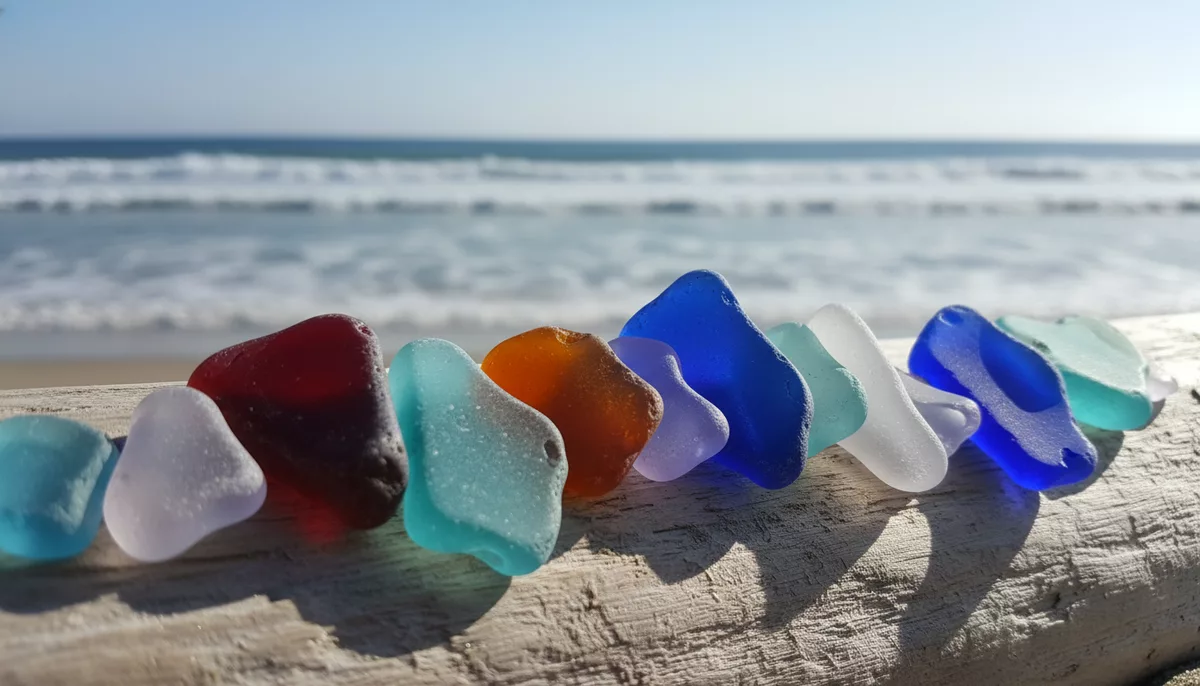
Not all sea glass is created equal. Walk any beach with a decent supply and you'll find plenty of white, brown, and green pieces - the colors that come from everyday beer bottles, wine bottles, and jars. But mixed in with the common stuff, if you know what to look for and where to search, you might spot something genuinely rare: a shard of deep red, a chip of bright orange, or a piece of soft lavender that's been tumbling in the ocean for decades.
Understanding sea glass colors means understanding the history of glass manufacturing. Every color tells a story about what the original object was, when it was made, and how it ended up in the ocean. This guide breaks down sea glass colors from the most common to the rarest, explains where each color comes from, and points you toward the beaches where your odds of finding something special are highest.
How Sea Glass Gets Its Color
Glass is colored by adding metalite oxides during manufacturing. Iron oxide produces greens and browns. Cobalt oxide creates deep blue. Manganese dioxide makes purple. Selenium gives red. Gold chloride produces a cranberry tone. The specific shade depends on the concentration of these additives, the furnace temperature, and the base glass recipe.
Once glass enters the ocean, it doesn't change color - but it does change appearance. Salt water and sand abrasion frost the surface, giving sea glass its signature matte finish. The tumbling process takes roughly 20 to 50 years to produce a well-rounded, properly frosted piece, though conditions like wave energy, sand coarseness, and water temperature all affect the timeline.
What this means for collectors: the color you find was set at the factory. A piece of red sea glass was red when it was a bottle or a vase or a taillight lens. The ocean shaped and frosted it, but didn't change the hue.
Common Colors (Easy to Find)
White / Clear
The most abundant sea glass color worldwide. Clear glass has been used for everything from mason jars to window panes to drinking glasses for centuries. It frosts to a milky white in the ocean. You'll find it on virtually every sea glass beach. While not rare, a perfectly shaped, thick, well-frosted white piece can still be satisfying to collect.
Kelly Green
The second most common color. Green glass comes primarily from beer bottles (Heineken, Rolling Rock, Perrier), wine bottles, and old soda bottles. Different manufacturers used slightly different greens, so you'll notice variation from pale lime to deep forest green. Most green sea glass dates from the mid-20th century onward, when green became the standard color for beverage bottles. If you want to see green sea glass in truly staggering quantities, Steklyashka Beach near Vladivostok is covered in millions of green glass pebbles from discarded Soviet vodka bottles.
Brown / Amber
The third most common, originating from beer bottles (most American brands), medicine bottles, and old food containers. Brown glass blocks UV light, which is why it's been preferred for beer - it prevents the light-struck "skunky" flavor. Amber shards are everywhere, but a really dark, thick piece with good frosting still catches the eye.
Uncommon Colors (Worth Keeping)
Seafoam Green
Lighter and bluer than standard green, seafoam glass typically comes from old Coca-Cola bottles, Depression-era glassware, and early 20th century insulators. It's noticeably different from kelly green - more of a blue-green that almost looks translucent when backlit. Finding seafoam means you've likely found a piece at least 50 years old, since modern glass manufacturers rarely produce this color.
Cobalt Blue
Cobalt blue sea glass is striking - a deep, rich blue that's unmistakable on the beach. It comes from Milk of Magnesia bottles, Noxzema jars, old poison bottles (which were made blue as a warning), and some decorative glassware. While not the rarest color, cobalt blue is uncommon enough that finding a good piece always feels like a win. Fort Bragg's Glass Beach produces cobalt blue with some regularity due to its history as a town dump.
Aqua / Cornflower Blue
Softer than cobalt, aqua sea glass comes from old Ball mason jars, fruit jars, and early 20th century bottles. The color results from natural iron impurities in the sand used to make glass before manufacturers learned to decolorize it. Cornflower blue - a lighter, more lavender-tinged blue - comes from similar sources. These colors are getting harder to find as the supply of old glass diminishes.
Rare Colors (Collector Finds)
Purple / Lavender
Purple sea glass has an unusual origin. Before World War I, American glass manufacturers used manganese dioxide as a decolorizing agent to make clear glass. When that glass is exposed to prolonged UV radiation (decades in the sun and surf), the manganese reacts and turns the glass purple. So every piece of purple sea glass started life as clear glass, typically made between 1880 and 1920 - read more about why this specific manufacturing window matters for dating old glass.
This makes purple sea glass a natural time capsule - if you find a purple piece, the original glass is at least 100 years old. The color ranges from pale lavender to deep amethyst depending on the manganese concentration. Sun-purple glass from the desert (where UV exposure is intense) tends toward deeper shades; ocean-tumbled pieces are often lighter lavender.
Pink
True pink sea glass is rare. It comes from Depression-era tableware (plates, cups, and serving dishes made in the 1930s), some types of art glass, and old decorative items. Pink glass was never mass-produced for bottles, so the supply entering the ocean was always limited. When you find pink, it's usually a small, thin piece - tableware glass was thinner than bottle glass, so it breaks into smaller fragments and wears down faster in the surf.
Yellow / Amber-Yellow
Not to be confused with common brown/amber, true yellow sea glass is rare. It comes from Depression-era tableware (Vaseline glass), old automotive turn signal lenses, and some decorative glass. Bright yellow was an expensive color to produce, so relatively little of it was manufactured. A clear, vibrant yellow piece is a genuine find on any beach.
Ultra-Rare Colors (Once-in-a-Lifetime Finds)
Red
Red is the holy grail of sea glass collecting. It's estimated that red pieces make up less than 1 in 5,000 pieces found on most beaches. The rarity comes down to manufacturing: red glass requires gold chloride or selenium as a colorant, both of which are expensive. Red glass was used for ship lantern lenses, old car taillights, some decorative ware, and a few specialty bottles.
Davenport Beach in California is one of the few places where red sea glass appears with any regularity, thanks to the Lundberg glass studio that operated nearby. Read about where Davenport sea glass comes from for the full history of why this beach produces colors found almost nowhere else.
Orange
Even rarer than red. Orange glass was used in a handful of decorative items, some art glass, and old warning lights. It's arguably the hardest standard color to find on any beach worldwide. Orange requires a precise mix of sulfur, selenium, and cadmium - a finicky formula that few manufacturers bothered with. When orange pieces do turn up, they almost always come from art glass or specialty items rather than mass-produced bottles.
Davenport Beach and Seaham Beach in northeast England are among the few locations where orange sea glass has been documented. At Seaham, the orange pieces trace back to the Londonderry Bottleworks, which produced decorative glass from the mid-1800s through 1921.
Turquoise / Teal
True turquoise - not the same as seafoam or aqua - is a vivid blue-green that stands out immediately. It comes from old glass insulators (the kind that sat atop telegraph and telephone poles), some art glass, and certain seltzer bottles. The color results from a specific copper oxide formula. Finding a well-frosted turquoise piece with good size and shape is a memorable moment for any collector.
Black Glass
True black glass is actually very dark olive or dark amber that appears black until you hold it up to the light. This is genuinely old glass - most black glass dates to the 1700s and 1800s, when it was used for rum bottles, wine bottles, and ale bottles. The dark color came from high iron content in the raw materials, which early glass makers couldn't refine out.
Finding black sea glass means finding something potentially 200+ years old. The best pieces show a deep green or amber glow when backlit. These pieces are especially prized because of their age and historical significance.
Specialty and Multi-Colored Sea Glass
UV-Reactive Glass
Some sea glass glows under ultraviolet light - a property that most collectors don't even think to check for. Vaseline glass (made with uranium oxide) glows bright green under UV. Manganese glass can fluoresce a pinkish-orange. Certain types of art glass react in other colors.
If you collect sea glass seriously, carrying a small UV flashlight is worth it. You might discover that ordinary-looking pieces in your collection have hidden fluorescent properties. Davenport Beach is known for UV-reactive pieces - bring a flashlight on evening hunts when the natural light is fading.
Bonfire Glass
Bonfire glass (also called campfire glass) is created when multiple glass pieces melt together in a fire, fuse, and then get tumbled by the ocean. The result is multi-colored, swirled pieces that combine two or more colors in ways that never existed in the original manufactured glass. These are one-of-a-kind pieces by definition. They're most common on beaches near old dumpsites where burning trash was common practice. Okinawa, Japan is one of the best places in the world to find bonfire glass, thanks to decades of beach-side waste burning at former dump sites.
Patterned and Embossed Glass
Sometimes you'll find sea glass with visible patterns - raised lettering, a textured surface from a pressed-glass dish, or part of a brand name from a bottle. These aren't color rarities, but they add historical value and collectibility. A piece with a partial word or a recognizable pattern connects you to a specific object and its story.
Where to Find Rare Colors
Not every beach gives you a fair shot at rare colors. The beaches that produce the best finds share a few characteristics: proximity to historical glass sources (factories, dumps, shipping routes), strong wave action for proper tumbling, and rocky or gravelly substrate that doesn't bury glass in deep sand.
Our location guides cover the world's top sea glass beaches in detail, but here's a quick reference for color hunters:
- Davenport Beach, California - Best for red, orange, turquoise, UV-reactive glass, and art glass pieces from the nearby Lundberg studio
- Fort Bragg Glass Beach, California - Best for volume and variety; good for cobalt blue, seafoam, and well-frosted white pieces
- Seaham Beach, England - Best for multi-colored art glass from the Victorian-era Londonderry Bottleworks
- Glass Beach, Kauai, Hawaii - Good for brown, green, and aqua pieces in a tropical setting
- Spectacle Island, Boston - Good for pottery fragments and historical glass from Boston's old landfill
- Okinawa, Japan - Best for bonfire glass and year-round tropical collecting across multiple islands
Tips for Identifying Colors in the Field
Wet sea glass looks different from dry sea glass. Colors appear deeper and more vivid when wet, and subtle color differences become easier to spot. Here are a few field identification tips:
- Hold it to the light. Back-lighting reveals the true color of dark pieces. What looks black might be deep olive; what looks brown might be honey amber.
- Check when wet. Some colors only reveal themselves on a wet piece. Dry lavender can look like white until you dip it in water.
- Carry a UV flashlight. Small keychain UV lights cost a few dollars and can reveal hidden fluorescence. Best used in shade or at dusk.
- Compare side by side. Place a questionable piece next to a confirmed common piece. Subtle color differences become obvious in direct comparison.
- Know your source. Different beaches produce different rarities. Knowing what glass sources were nearby - factories, dumps, shipping routes - helps you identify what you're likely to find. Read our Davenport glass origins article for an example of how local history shapes what washes ashore.
Building a Color Collection
Before spending money on rare colors, make sure you know what you're buying. Our guide to telling real sea glass from fake covers the surface texture tests, shape analysis, and frosting patterns that separate genuine ocean-tumbled glass from machine-tumbled craft glass.
If you're new to the hobby, our beginner's guide to sea glass collecting covers the basics - where to look, when to go, what to bring, and how to develop your eye for quality pieces.
Many serious collectors organize by color, working toward a complete spectrum. Starting with the common colors is easy - white, green, and brown take minutes on a good beach. The uncommon tier (seafoam, cobalt blue, aqua) might take a season of regular beachcombing. The rare colors (purple, pink, yellow) could take years. And the ultra-rares - red, orange, true turquoise - might require dedicated trips to specific beaches like Davenport or Seaham. Once you have pieces you want to keep forever, consider turning them into wearable art - our sea glass jewelry making guide covers wire wrapping, drilling, and bezel techniques.
There's no wrong way to collect. Some people focus exclusively on one color. Some hunt for the biggest piece in each shade. Others look for pairs or matching sets. The important thing is getting out to the beach, paying attention to what the ocean gives up, and appreciating the century-long journey each piece took before landing at your feet.