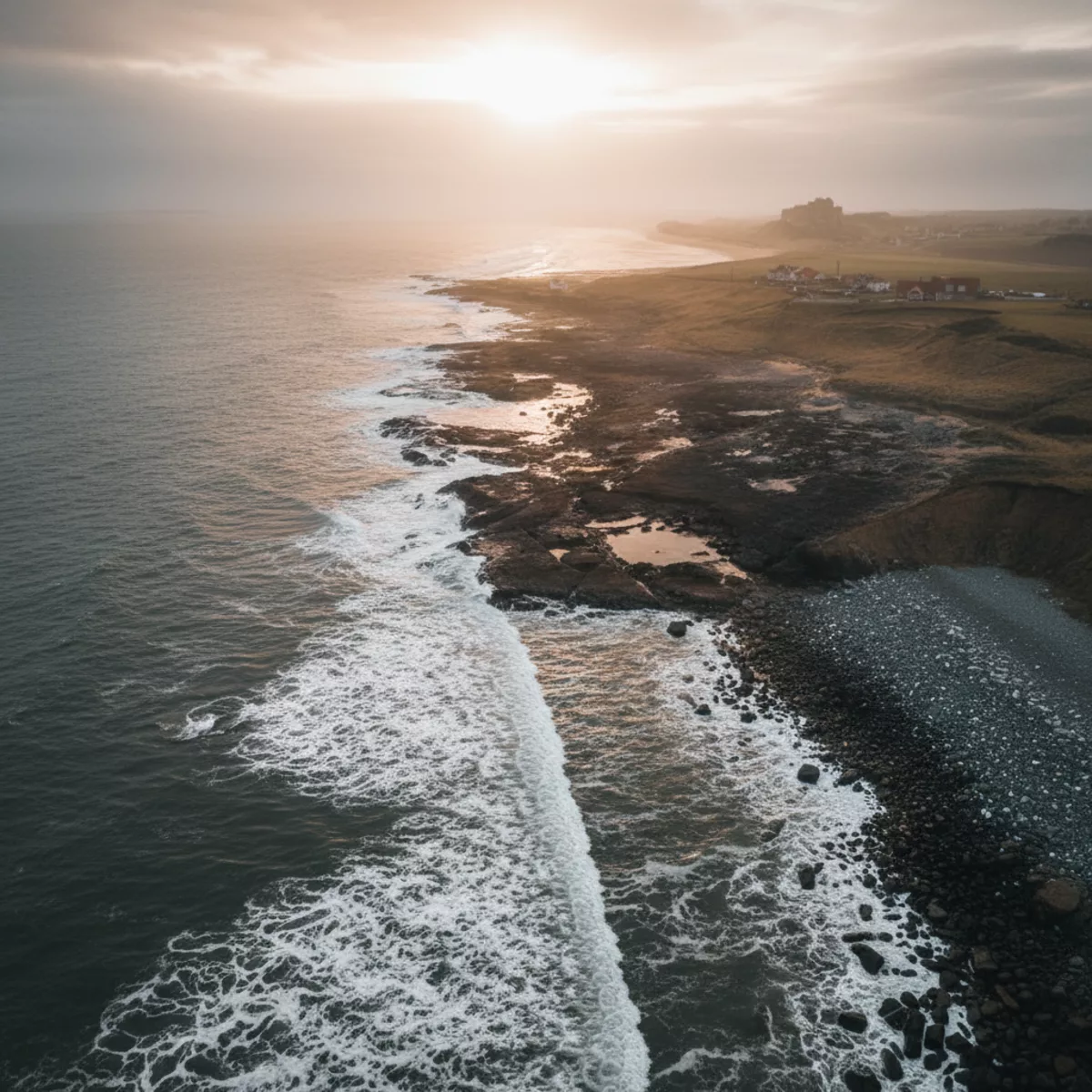
Ask serious sea glass collectors to name the best beaches in the world and Seaham comes up almost every time. This stretch of North Sea coastline in County Durham, northeast England, produces some of the most extraordinary sea glass found anywhere - not just in quantity, but in color and character. The glass here isn't from beer bottles or household trash. It's from Victorian-era glass factories, and the difference shows in every piece you pick up.
The Seaham Bottle Works
Seaham's reputation starts with one factory: the Londonderry Bottleworks, established in the 1850s by the Marquess of Londonderry. The works produced bottles for the booming coal and shipping industries that defined northeast England during the Victorian era. At its peak, the factory turned out thousands of bottles a day - green, amber, aqua, cobalt blue, and clear glass flowing from its furnaces in enormous quantities.
But the Bottleworks wasn't the only glass operation in the area. Several smaller glassworks operated along the Durham coast during the 19th and early 20th centuries. Together, these factories generated massive amounts of waste glass - defective bottles, furnace slag, test batches in experimental colors, and the remnants of end-of-day production runs where glassblowers mixed leftover molten glass together.
Standard practice at the time was simple: dump it in the sea. For decades, tons of glass waste went straight off the cliffs and into the North Sea. Nobody thought twice about it. Glass was cheap, the ocean was right there, and environmental regulation didn't exist yet.
The factories eventually closed. The Londonderry Bottleworks shut down in the early 1920s, and the other smaller operations followed over the next few decades. But the glass they'd dumped kept working its way through the surf, slowly tumbling against rocks and sand, smoothing and frosting over the course of a century.
What Makes Seaham Glass Special
The glass that washes up at Seaham is fundamentally different from what you'll find at most other beaches. A few things set it apart:
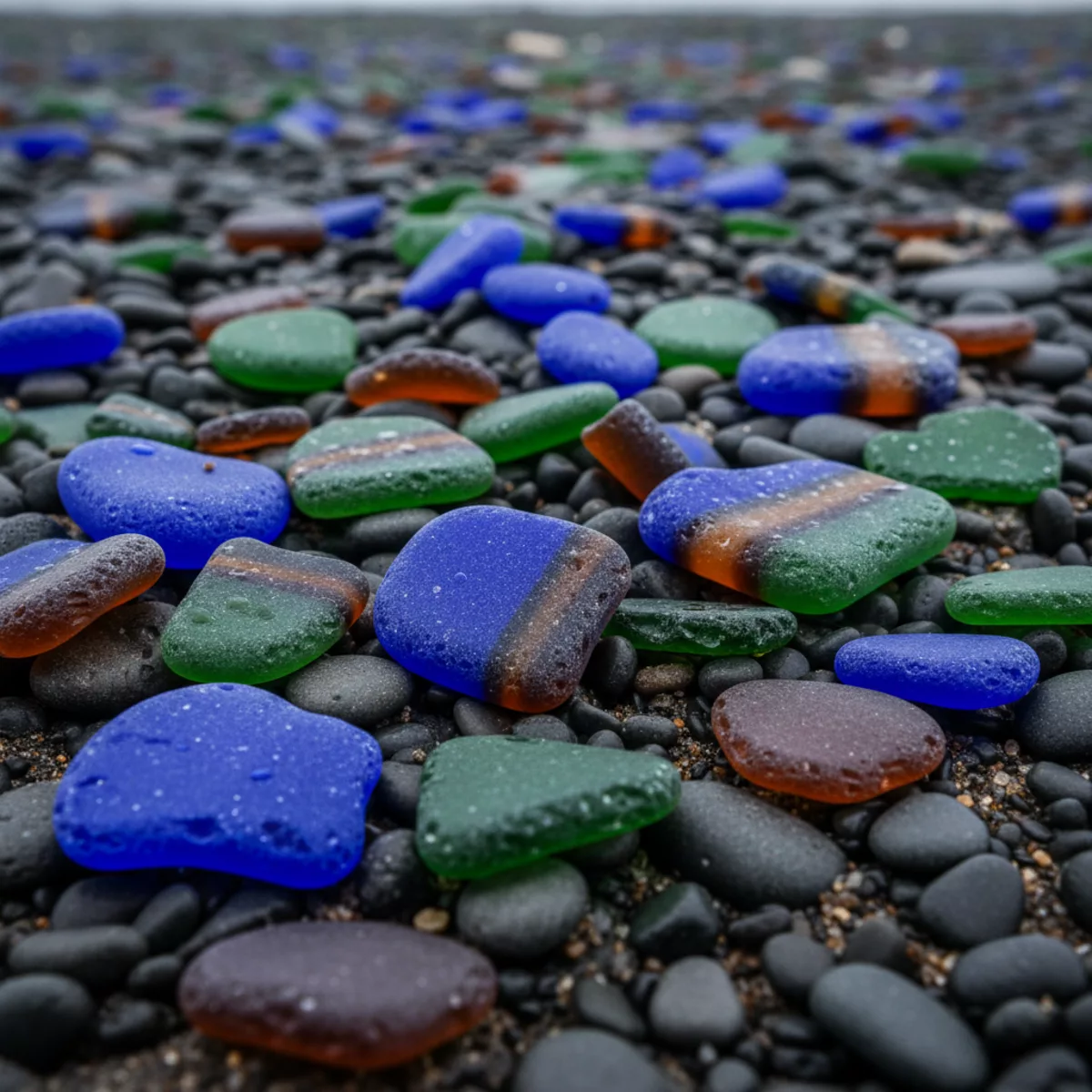
The colors. Because this glass came from factory production - not just consumer bottles - the color range is remarkable. You'll find standard greens and browns, sure. But you'll also find deep cobalt blue, teal, amber, pale aqua, seafoam, and occasionally pieces in pink, purple, or even red. The end-of-day pieces are the real prizes: multi-colored chunks where glassblowers mixed whatever was left in the furnace, creating swirled patterns of two, three, or even four colors in a single piece.
The age. Most of this glass is 100 to 170 years old. That means it's been tumbling in the North Sea for over a century, producing an exceptionally deep frost and smooth finish. Old glass also tends to be thicker and heavier than modern glass, so the pieces have a satisfying weight to them.
The variety. Factory waste included things you'd never find in household dump glass - thick furnace drippings, bottle bases with pontil marks, experimental color batches, and chunks of raw glass that never made it into a mold. These unusual forms make Seaham glass interesting even when the color is common.
Where to Hunt
The main sea glass hunting area stretches along the beach south of Seaham Harbour, roughly from the end of the promenade down toward Nose's Point and Blast Beach. This section of coast sits directly below where the old factory waste was dumped, so it's where the highest concentration of glass appears.
Blast Beach is the most productive spot. The name comes from the blast furnace slag that was also dumped here, and you'll find dark, glassy slag mixed in with the sea glass. The beach is rocky and strewn with rounded pebbles - sea glass hides among them, so you need to look carefully. The best pieces often sit in the shingle line where the tide deposits small objects.
Nose's Point marks the southern end of the main hunting zone. The cliffs here are made of magnesian limestone, and erosion constantly exposes new material. After storms, fresh glass gets washed out of the cliff base and deposited on the beach below.
Seaham Hall Beach (sometimes called Chemical Beach) to the north also produces glass, though generally in smaller quantities. It's less crowded and worth checking if the main area has been picked over.
Best Time to Visit
Timing matters at Seaham, maybe more than at most sea glass beaches. A few factors to consider:
- After storms - Heavy weather churns up the seabed and erodes the cliffs, releasing glass that's been buried for years. The day after a North Sea storm is the single best time to hunt at Seaham. Winter storms are the most productive.
- Low tide - Obvious but important. Low tide exposes more beach and reveals glass that's normally underwater. Check tide tables before you go.
- Early morning - Seaham has become famous enough that it attracts regular collectors, especially on weekends. Getting there at first light gives you first pick.
- Winter months - November through March brings the roughest seas and the most productive hunting. The trade-off is cold, wind, and shorter daylight hours. Dress warm.
- Weekdays - The beach sees far fewer visitors during the week. If you can go on a Tuesday morning after a storm, you're in ideal conditions.
Collecting Rules
Unlike Glass Beach in Fort Bragg, collecting sea glass at Seaham is currently allowed. There are no park regulations prohibiting it, and locals have been picking up glass here for generations. That said, the supply isn't infinite. The factories closed over a century ago, and the amount of glass washing ashore has noticeably decreased over the decades.
Some informal etiquette applies. Most regular collectors take only their favorite pieces and leave the smaller or more common glass for the beach. Taking bucketfuls is frowned upon by the local community, and selling Seaham glass commercially has become a sensitive topic. The general attitude is: enjoy it, take a few special pieces, but don't strip the beach.
Seaham vs. Other Top Beaches
How does Seaham compare to the other legendary sea glass destinations?
- Seaham vs. Fort Bragg - Fort Bragg has more glass overall, but it's mostly common colors from household bottles, and you can't take any. Seaham has rarer colors from factory production, and collecting is permitted. Fort Bragg wins on visual spectacle; Seaham wins on collectible quality.
- Seaham vs. Davenport Beach - Both produce art-quality glass from specific manufacturing sources. Davenport's glass is more colorful and dramatic (multi-color art glass from Lundberg Studios), but the hunting conditions are far more dangerous. Seaham is accessible and safe by comparison, though the glass is generally less vivid.
- Seaham vs. Steklyashka Beach, Russia - Steklyashka has larger pieces and more glass overall, but the colors are mostly standard bottle colors. Seaham's Victorian factory glass is more varied and historically interesting.
Getting There
Seaham is a small coastal town about 6 miles south of Sunderland and 12 miles east of Durham city. Getting there is straightforward:
- By car - From Durham, take the A19 north and exit for Seaham. The drive takes about 20 minutes. There's parking near the harbour and along the seafront.
- By train - Seaham has its own railway station on the Durham Coast Line, with regular services from Sunderland (10 minutes) and Newcastle (30 minutes). The beach is about a 15-minute walk from the station.
- From London - Take the East Coast Main Line to Durham (around 2.5 hours), then connect to Seaham by train or drive.
- From Newcastle Airport - About 20 miles north. A car is the easiest option from the airport.
What to Bring
- Warm, waterproof clothing - The northeast England coast is cold and windy most of the year. Even in summer, you'll want a jacket.
- Sturdy footwear - The beach is rocky shingle, not sand. Wellies or hiking boots work best.
- A small bag or container - Something to carry your finds. A zip-lock bag works fine.
- Gloves - Not just for warmth. Some glass pieces can have sharp edges, especially freshly exposed ones.
- A UV flashlight - Some Seaham glass is uranium glass (Vaseline glass) that fluoresces brilliant green under ultraviolet light. A small UV torch adds another dimension to your hunt.
The Durham Heritage Coast
Seaham sits along the Durham Heritage Coast, a stretch of coastline that was heavily industrialized for centuries - coal mining, chemical works, glass factories, steel mills. For most of the 20th century, these beaches were among the most polluted in Europe. Mining waste, industrial slag, and chemical runoff made them essentially unusable.
Starting in the 1990s, a major restoration effort called Turning the Tide cleaned up the coastline. Millions of tons of colliery waste were removed, habitats were restored, and the beaches were reclaimed for public access. Today, the Durham Heritage Coast is a surprisingly beautiful place - dramatic limestone cliffs, wildflower meadows, and clean beaches. The sea glass is essentially the last echo of the industrial era, a remnant of the factories that once defined this coast.
Walking the coastal path from Seaham south to Crimdon gives you about 11 miles of stunning scenery, with opportunities to find sea glass along most of the route. It's one of the best coastal walks in northern England.
More Sea Glass Locations
Planning your next sea glass trip? Browse our complete list of sea glass locations, or read about the legendary Davenport Beach and Fort Bragg Glass Beach in California. For another beach shaped by industrial history, see Spectacle Island in Boston Harbor - a former city dump where century-old pottery and glass wash up daily. For a quieter UK option, the Cardigan Bay beaches in west Wales offer well-frosted glass from centuries of Irish Sea shipping with far less competition from other collectors.