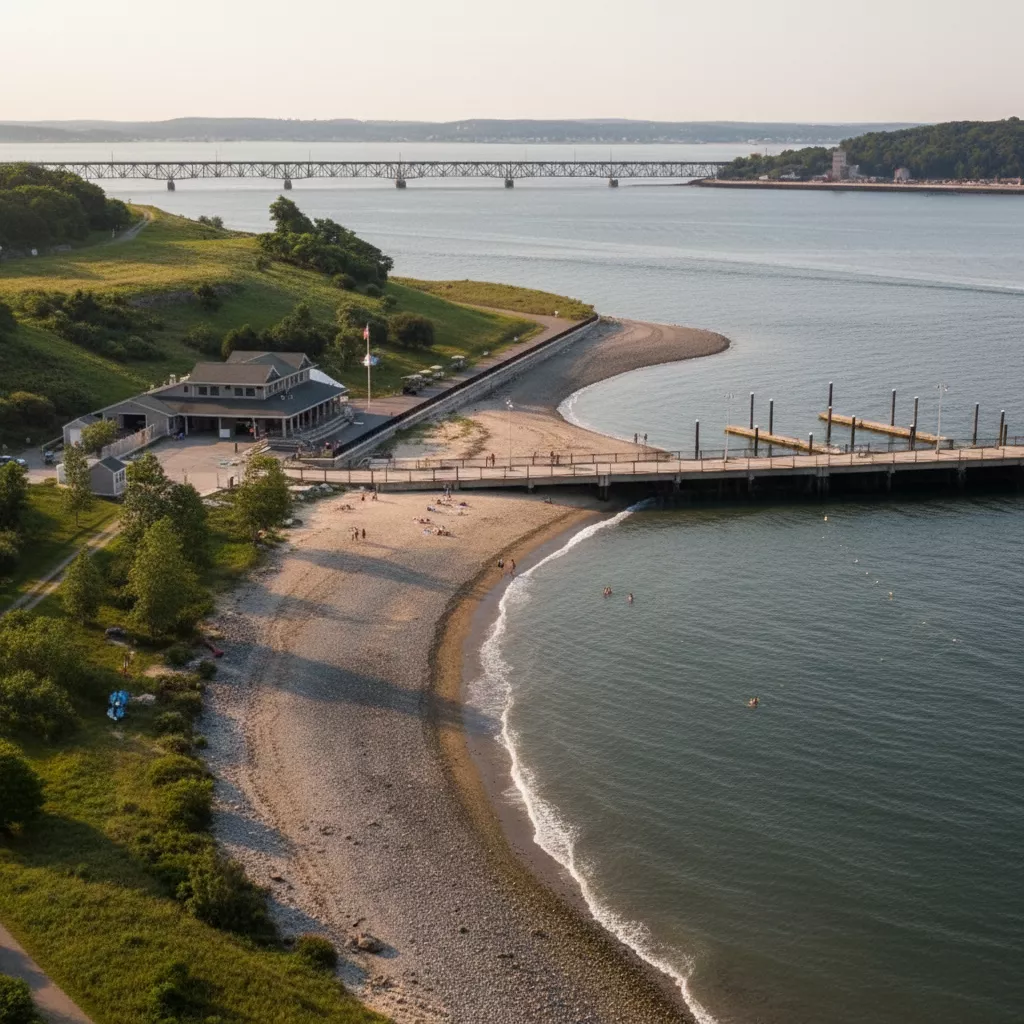
Most of the world's great sea glass beaches owe their existence to some form of human carelessness - dumped bottles, demolished factories, forgotten waste. Spectacle Island in Boston Harbor takes that origin story further than almost anywhere else. This 114-acre island spent the better part of a century as Boston's garbage dump, burning trash heap, and general dumping ground before being buried under millions of cubic yards of dirt from the Big Dig highway project in the 1990s. Today it's a national park with hiking trails, a swimming beach, and some of the most productive sea glass hunting on the entire East Coast.
The twist? You can look at the glass all you want. You just can't take it home.
From Garbage Fire to National Park
Spectacle Island's history reads like a timeline of every bad idea Boston had about waste disposal. Long before European settlement, Indigenous peoples used the island as a fishing camp, discarding shells and fish bones along the shore for roughly a thousand years. By the 1700s, colonists had turned it into a quarantine station for smallpox patients. Then came a horse rendering plant in the 1800s, where dead horses were boiled down into glue and fertilizer. The smell was reportedly unbearable from the mainland.
But the real transformation came in the early 1900s, when Boston started shipping its municipal garbage to Spectacle Island by barge. For decades, trash piled up - broken bottles, dishes, ceramic tableware, industrial waste, household garbage, and everything else a growing city threw away. By the 1950s, the mountain of refuse was so unstable that a bulldozer sank into it and was never recovered. The city's solution was to start burning the trash. The fires burned for about ten years, smoldering through layers of garbage while sending smoke across the harbor.
Glass doesn't burn. While everything else incinerated, millions of glass fragments sank through the heap, breaking and tumbling as they went. Decades of wave action along the shoreline did the rest, grinding sharp edges into the smooth, frosted finish that collectors prize.
The island got its second chance in the 1990s when Boston's massive Big Dig highway project needed somewhere to put 3.7 million cubic yards of excavated dirt. Spectacle Island became the repository, and the clay cap sealed the old landfill underneath. The island was reshaped, planted with native grasses, and opened to the public in 2006 as part of the Boston Harbor Islands National Recreation Area.
What the Beaches Produce
The sea glass on Spectacle Island comes from a different era than what you find at most other beaches. The dumping peaked between the 1920s and 1960s, which means the glass predates the plastic revolution. You're finding pieces from a time when nearly everything - medicine, food, beverages, household chemicals - came in glass containers.
Common finds include:
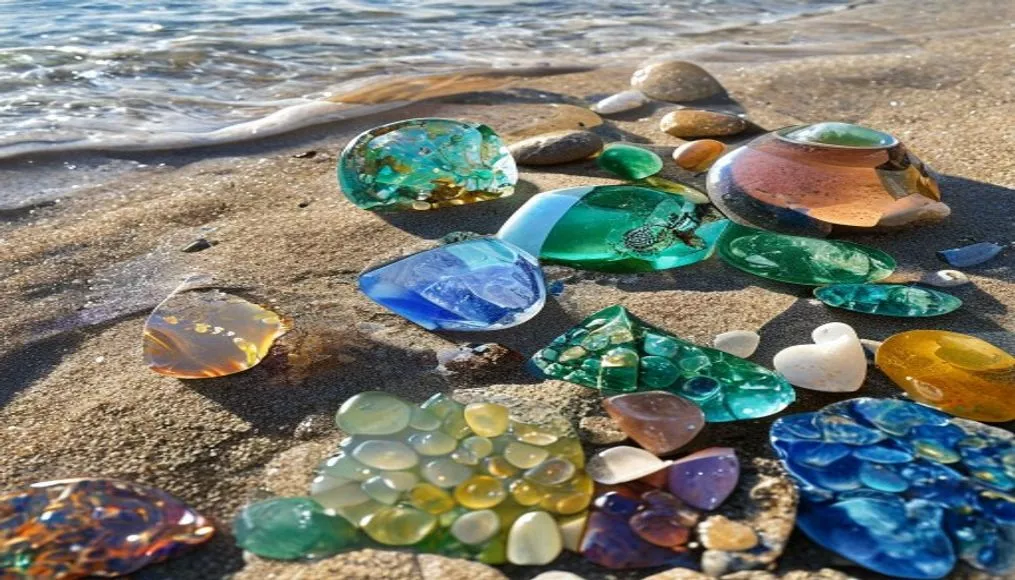
- Brown and amber - Beer bottles, medicine bottles, and food containers make up a large percentage of what washes up. The brown glass here tends to be well-tumbled and deeply frosted from decades in cold Atlantic water.
- Green - Wine bottles, soda bottles, and Depression-era glass contribute various shades from pale olive to deep emerald. Some pieces are thick enough to identify as the bases or necks of old bottles.
- Clear/white - Jars, window glass, plate glass, and clear bottles. These pieces frost beautifully and can be hard to spot against the sand until you train your eye.
- Cobalt blue - Relatively common here compared to other beaches, thanks to the volume of old medicine bottles (Milk of Magnesia, Bromo-Seltzer, Vicks) and decorative glassware in the dump.
- Pottery and ceramic shards - This is where Spectacle Island really stands out. The beaches are scattered with fragments of old dishes, tiles, stoneware crocks, and ceramic tableware. Some pieces have visible patterns - blue and white transferware, floral designs, maker's marks. A few pieces date to the 1800s.
- Milk glass - Opaque white glass from cosmetic jars and decorative pieces turns up occasionally. It's distinctive and easy to spot.
- Sea-tumbled metal and other oddities - Corroded coins, smoothed ceramic marbles, and fragments of porcelain dolls have all been reported. The dump didn't discriminate about what went in, and the ocean doesn't discriminate about what it washes back.
The variety here rivals Seaham Beach in England, though the source material is different. Seaham's glass comes primarily from one factory. Spectacle Island's comes from an entire city's household waste, which makes every visit a little unpredictable.
The No-Collecting Rule
Here's the part that frustrates collectors: you cannot remove sea glass or pottery from Spectacle Island. The island is part of the Boston Harbor Islands National Recreation Area, managed jointly by the National Park Service and the Massachusetts Department of Conservation and Recreation. Everything on the island - glass, pottery, shells, rocks - stays on the island.
Rangers do enforce this. It's not just a suggestion on a sign that everyone ignores. Visitors are welcome to gather pieces, sort them, photograph them, arrange them into patterns on the sand, and generally enjoy the hunt. But everything goes back on the beach before you board the ferry home.
For serious collectors, this might seem like a dealbreaker. But there's something to be said for a beach where the glass doesn't get depleted year after year. Unlike Glass Beach on Kauai or Fort Bragg, where decades of collecting have thinned the supply, Spectacle Island's beaches are still packed. The no-take policy means every visitor gets the same experience. You just have to make peace with leaving your finds behind.
Getting There
Spectacle Island is only accessible by ferry. There's no bridge, no private dock, and no kayak landing (without prior arrangement). The ferry is part of the experience - a 30-minute ride across Boston Harbor that passes historic forts and harbor landmarks.
Here's how to get there:
- Ferry departure: Boats leave from Long Wharf North, at 66 Long Wharf in downtown Boston. It's near the New England Aquarium, easily reached by the Blue Line (Aquarium station) or by walking from most downtown hotels.
- Season: Public ferries run from late May through mid-October. The island is closed to the public during the off-season.
- Schedule: Ferries typically run several times daily, with the first boat leaving mid-morning and the last boat returning in late afternoon. Check the Boston Harbor Islands website for current schedules - they change year to year.
- Tickets: Round-trip ferry tickets cost around $20-25 for adults. National Park passes do not cover the ferry (the island itself has no entrance fee, but you need the boat to get there).
- Time on island: Plan for at least 3-4 hours. The ferry schedule gives you natural windows, and you'll want time for both beachcombing and the hiking trails.
One thing to plan around: if you miss the last ferry, you're stuck. There's no overnight camping on Spectacle Island, and the rangers will make sure everyone boards the last boat out. Keep track of time.
Best Time to Visit
The ferry season limits your options to roughly June through October. Within that window:
- Early season (June) - Fewer crowds, cooler temperatures, and the beach has had all winter and spring to churn up fresh glass. This is probably the best time for beachcombing, though the water is still cold for swimming.
- Mid-summer (July-August) - The busiest period. Families, day-trippers, and tour groups fill the ferries. The beach gets crowded, but the island is big enough to find quiet spots if you walk past the main swimming area.
- Fall (September-October) - Crowds thin out, the weather cools, and the light gets better for photography. September is arguably the sweet spot - warm enough to enjoy the beach, quiet enough to hunt glass without stepping over towels.
- Low tide - Always check Boston Harbor tide charts. Low tide exposes more of the glass-rich zone between the high-water line and the surf. Some of the best pottery finds come from areas that are normally underwater.
- After storms - Northeast storms (nor'easters) in fall can churn up significant new material. If you can get out to the island within a day or two of a storm passing through, the pickings improve noticeably.
Where to Look on the Island
Spectacle Island is shaped roughly like a figure eight (hence the name - two rounded hills connected by a narrow bar, resembling a pair of spectacles). Not all shoreline is equally productive:
- North Beach - The main swimming beach on the island's north side. This is the most accessible area and where most visitors spend their time. Glass is abundant here, but it gets picked over quickly on busy days (don't worry - it goes back).
- South-facing shores - Walk past the main beach toward the south drumlin. The southern shoreline is less visited and receives different wave action. Pottery shards seem to concentrate here more than on the north side.
- The bar - The narrow strip connecting the two halves of the island is lower and gets washed over during storms. This transitional zone can produce interesting finds, especially after rough weather.
- Rocky outcrops - Sea glass and pottery get trapped in crevices between rocks. Bring your eyes close to the ground in rocky areas - the pieces wedge into gaps where casual walkers don't notice them.
What to Bring
- A camera or phone - Since you can't take the glass, photography is everything. A macro lens or clip-on macro for your phone helps capture detail on pottery patterns and glass textures.
- Sunscreen and a hat - The island is mostly open grassland with limited tree shade, especially on the trails and beach areas.
- Water and snacks - The visitor center has limited food service (check before going), but bring your own to be safe. There are no stores on the island.
- A small towel or cloth - Useful for cleaning off pottery pieces before photographing them. A wet shard with sand on it doesn't photograph as well as a wiped-down one.
- Comfortable walking shoes - The hiking trails to the top of North Drumlin are worth the climb for panoramic harbor views. Flip-flops are fine for the beach but not the trails.
- Layers - Boston Harbor is cooler and windier than downtown. Even in July, the breeze off the water can make it feel 10 degrees cooler than the city.
Boston's Other Sea Glass Spots
If the no-collecting rule is a problem, or if you're visiting outside ferry season, Boston has a few mainland alternatives:
- Winthrop Beach - Just north of Boston across the harbor, this stretch of sand produces decent sea glass, especially after winter storms. No collecting restrictions.
- Nahant Beach - A long barrier beach on the North Shore that yields scattered sea glass finds. Better after storms, and you can keep what you find.
- Nantasket Beach, Hull - South of Boston, this beach has a long history and occasionally produces interesting glass. The south end near Paragon Park tends to be more productive.
- Cape Cod - Various beaches along the Cape produce sea glass, especially on the bay side. Dennis, Brewster, and Wellfleet are frequently mentioned by New England collectors.
None of these match Spectacle Island for sheer concentration. But they let you take your finds home.
Is It Worth the Trip?
If you're a collector who measures success by what goes in your pocket, Spectacle Island might leave you conflicted. You'll see more glass and pottery in one visit than most beaches produce in a month, but you leave it all behind. Some people love that - the experience without the extraction. Others find it maddening.
If you're visiting Boston anyway, it's an easy day trip and genuinely one of the most interesting sea glass beaches in the country. The history alone - garbage dump to burning trash heap to Big Dig burial to national park - makes it unlike any other sea glass destination. The ferry ride, the harbor views, and the hiking trails are bonuses that other sea glass beaches can't match. And the pottery finds, especially pieces with visible patterns from the 1800s, are things you won't see at Davenport or any West Coast beach.
Just bring a good camera. Your souvenirs are going to be digital.
More Sea Glass Locations
Exploring the world's best sea glass spots? Check out our complete list of sea glass locations, including Davenport Beach in California, Fort Bragg Glass Beach, Seaham Beach in England, and Glass Beach on Kauai.