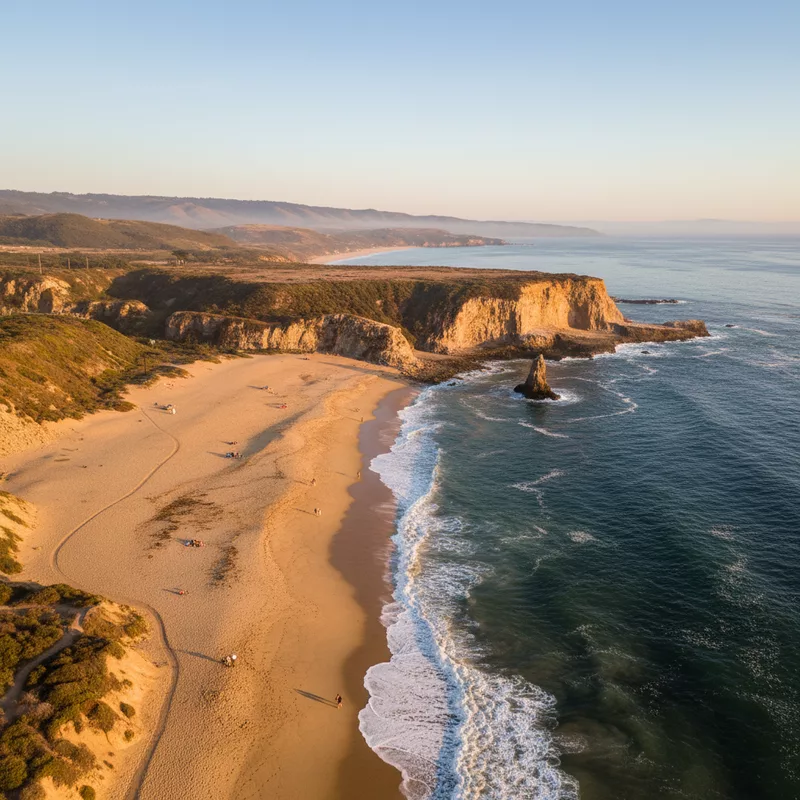
Davenport Beach sits along Highway 1 in Santa Cruz County, California, about 10 miles north of the city of Santa Cruz. It's widely considered one of the best sea glass beaches in the world, known for producing rare colors that are nearly impossible to find elsewhere.
History
The abundance of sea glass at Davenport comes from the old Davenport Cement Plant, which operated from 1906 to 2010. Over the decades, various materials — including glass from operations, nearby dumps, and household waste — made their way into the ocean. The constant wave action has tumbled these glass fragments into smooth, frosted gems.
What Makes It Special
Davenport is known for producing sea glass colors that are extremely rare at other beaches:
- Red and orange — Among the rarest colors found anywhere
- Turquoise and teal — Beautiful pieces from old bottles and insulators
- Black glass — Very old glass that appears black but glows deep olive or amber when backlit
- Multi-colored patterns — Bonfire glass and art glass pieces
- UV-reactive glass — Some pieces glow under ultraviolet light
Visiting Tips
- Best time to search is at low tide, especially after winter storms
- The beach is accessed via a short trail from the parking area on Highway 1 - see our detailed directions and parking guide for step-by-step instructions
- Look near the base of the cliffs and in the gravel areas
- Bring a UV flashlight for finding fluorescent pieces
- Check tide tables before visiting — the beach can be dangerous at high tide
From Our Archives
We've been documenting Davenport Beach finds since 2017. Learn about where Davenport sea glass comes from - its origins trace back to the famous Lundberg art glass studio. See our guide to the coveted world globe sea glass pieces that collectors prize. Read our tips on digging for sea glass at Davenport - what tools to bring and where to dig. Check our full archive collection for more field reports and photos from our visits.