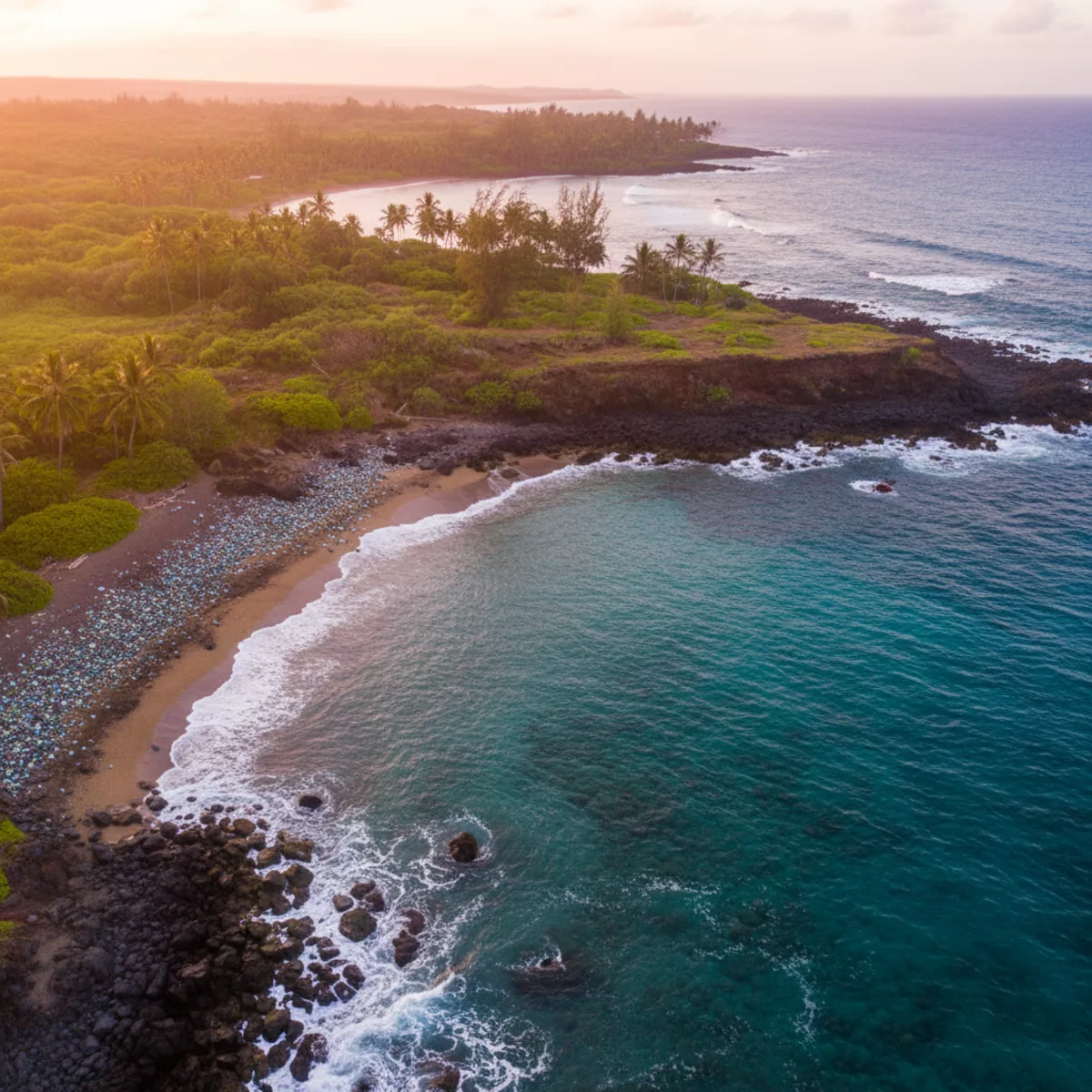
Hawaii has no shortage of beautiful beaches, but Glass Beach near Port Allen on Kauai's south shore is something different. Instead of white sand or smooth pebbles, this small pocket beach is covered with thousands of sea glass pieces - brown, green, aqua, clear, and the occasional flash of blue, all ground smooth by decades of Pacific surf against volcanic rock. It's one of the most concentrated sea glass deposits in the United States, and getting there requires almost no effort compared to more demanding sea glass destinations like Davenport Beach.
How the Glass Got Here
Glass Beach owes its existence to industrial carelessness. For years, a nearby company dumped broken bottles, auto glass, tableware, and other glass waste off the shoreline west of Port Allen Harbor. The dumping happened over several decades during the mid-20th century, when Hawaii's waste disposal regulations were either nonexistent or loosely enforced on the outer islands. Port Allen was - and still is - a working harbor on Kauai's south shore, serving both commercial shipping and the local sugarcane industry that once dominated the island's economy.
The glass went into the ocean in sharp, dangerous chunks. But the Pacific doesn't leave things alone. Waves, volcanic rock, and coral sand went to work on it. Over the decades, the constant churning tumbled those broken shards into smooth, frosted pebbles. The rougher the coastline, the faster the tumbling happens, and this stretch of Kauai's south shore is exposed to open ocean swells that provide plenty of energy.
Nobody planned for this beach to become an attraction. The dumping was illegal by modern standards, and it took decades of wave action to transform an environmental eyesore into something collectors travel thousands of miles to see.
What You'll Find
Glass Beach isn't a place for rare, museum-quality pieces. What makes it remarkable is the sheer quantity of glass and the unique setting - dark volcanic rock and red Hawaiian dirt contrasting with thousands of sea glass pebbles in every direction.
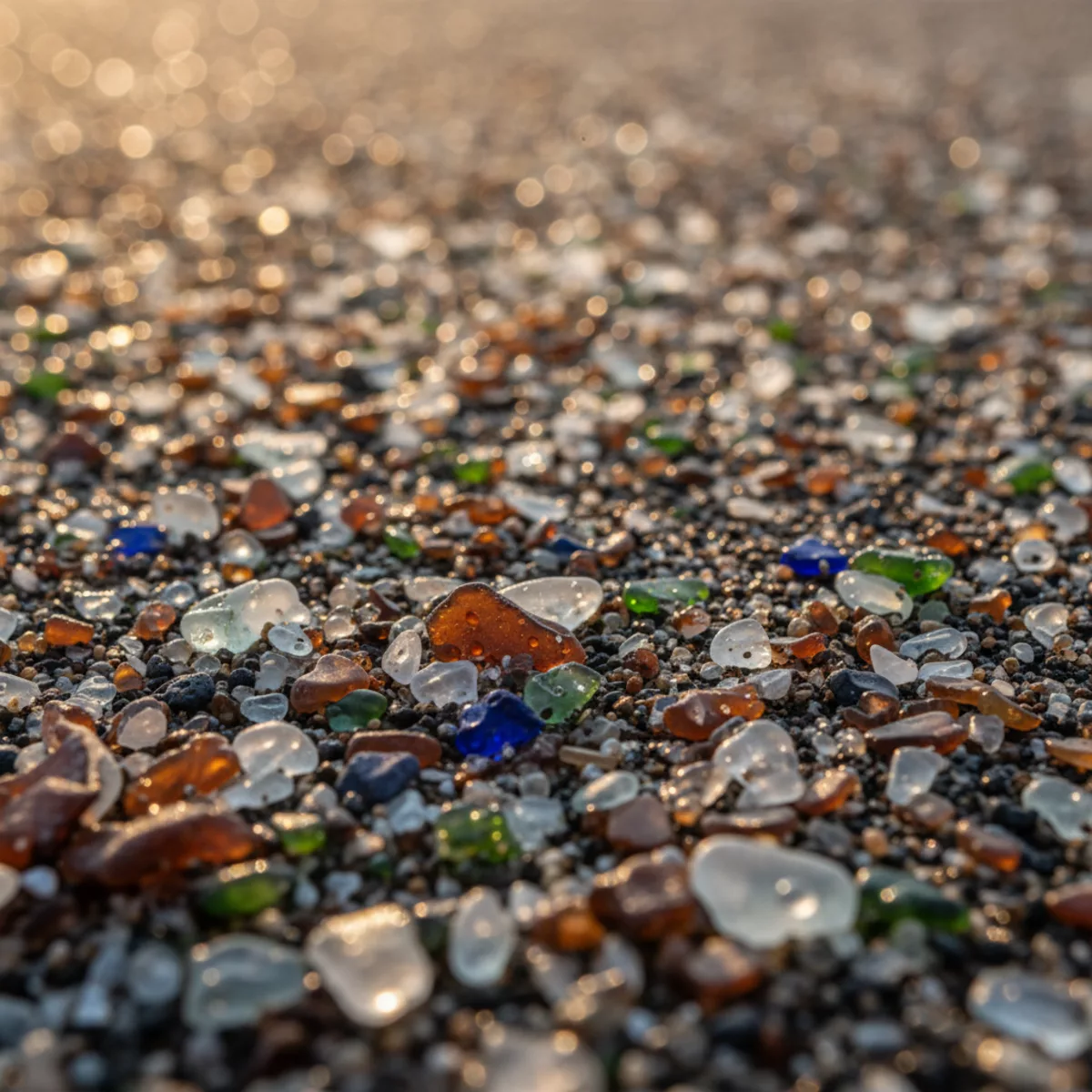
The majority of the glass falls into a few color categories:
- Brown - The most common color, from beer bottles and other amber glass containers. You'll find pieces ranging from small BB-sized pellets to pieces the size of a quarter.
- Green - Second most common. Wine bottles, soda bottles, and other green container glass. Shades range from pale lime to deep forest green.
- Clear/white - From jars, plate glass, auto windshields, and clear bottles. These pieces tend to be well frosted because clear glass shows the frosting effect more visibly.
- Aqua and seafoam - Less common but regularly found. These cooler tones likely come from older bottles, mason jars, or decorative glass that was part of the dumped material.
- Blue - Occasional cobalt blue pieces turn up, probably from medicine bottles or decorative glassware. Finding one among the browns and greens feels like a small victory.
The pieces here tend to be small - most are marble-sized or smaller. The constant wave action against the volcanic rock grinds the glass down efficiently. You won't find the softball-sized boulders that show up at Davenport, or the thick Victorian chunks from Seaham Beach. But what Glass Beach lacks in size, it makes up for in density. There are spots where every footstep lands on glass instead of sand.
Getting There
Glass Beach sits just west of Port Allen Harbor in the small town of Eleele, on Kauai's south shore. It's about 15 miles west of Poipu and 20 miles from Lihue, Kauai's main town and airport.
To find it:
- Take Highway 50 (Kaumualii Highway) west from Lihue toward Waimea.
- Turn left onto Highway 541 toward Port Allen/Eleele. You'll pass through a residential area.
- Follow the road toward the harbor. Near the end, you'll see a dirt pulloff area on the left side of the road before you reach the main port facilities.
- Park in the dirt lot and walk down the short path to the beach. The trail is only a couple of minutes long.
There are no official signs for "Glass Beach" - look for the informal parking area and the worn footpath leading down to the water. It's a well-known local spot, so if you ask anyone in Eleele, they can point you in the right direction. The access is easy - no climbing, no scrambling over rocks, no wetsuit required. It's one of the most beginner-friendly sea glass beaches anywhere.
Best Time to Visit
Kauai's south shore has a few advantages over sea glass beaches in colder climates:
- Year-round access - Unlike Seaham or Davenport, you don't need to time your visit around winter storm seasons. Glass Beach is huntable in any month. Hawaii's consistent trade winds and warm temperatures make it comfortable year-round.
- Morning visits - Early morning is best for two reasons. The light is better for spotting glass (the low angle makes frosted pieces catch the sun), and you'll beat the tour groups that sometimes arrive mid-morning.
- Low tide - Standard sea glass advice applies here. Low tide exposes more of the beach and reveals glass that's normally underwater. Check tide charts for Kauai's south shore before you go.
- After south swells - Summer south swells can stir up the beach and expose fresh glass. But even on calm days, there's plenty to find - the concentration is that high.
- Dry season (April-September) - Kauai's south shore is drier than the north, but the winter months bring occasional rain that can make the dirt access path muddy. Summer visits are generally the most pleasant.
Collecting Rules and Etiquette
This is where Glass Beach gets complicated. Technically, removing natural resources from Hawaii's shorelines is regulated. But sea glass occupies a gray area - it's not a natural resource, it's the remnant of human pollution. Local attitudes are mixed.
Some collectors take a pocketful and nobody minds. Others have shown up with buckets and bags, which draws disapproval from locals and other visitors. The beach has noticeably less glass than it did 10 or 15 years ago, partly from collecting and partly from natural processes carrying glass further out to sea.
The practical advice: take a few pieces as souvenirs if you want, but don't strip the beach. Leave the experience intact for the next person. And absolutely don't try to sell Kauai Glass Beach pieces as rare - they're common colors, and experienced collectors will know exactly where they came from.
Glass Beach vs. Other Hawaiian Sea Glass Spots
Kauai's Glass Beach isn't the only sea glass hunting in Hawaii, but it is the most concentrated:
- Hanapepe Bay, Kauai - About 10 minutes east of Glass Beach, Hanapepe's shoreline also produces sea glass, though in smaller quantities. The setting is quieter and more scenic, and some hunters report finding rare colors (pink, deeper blue) that don't turn up at Glass Beach.
- North Shore, Oahu - The seven-mile stretch of North Shore beaches occasionally yields sea glass, especially after winter swells. The finds are scattered and unpredictable, but Oahu's glass tends to come from older sources and can include interesting pieces.
- Sand Island Beach Park, Oahu - Between Honolulu Airport and downtown, this urban beach park is known among local collectors for turning up rare colors including cornflower blue, milk glass, and UV-reactive pieces. The setting isn't tropical paradise - it's industrial harbor - but the glass finds can be surprisingly good.
- Honoli'i Beach Park, Big Island - Near Hilo, this surfer's beach mixes sea glass into its pebbly shoreline. Cobalt blue pieces and sea pottery are reported here.
What to Bring
- Reef-safe sunscreen - Hawaii law requires it, and you should use it. The beach is exposed with minimal shade.
- Water shoes or sandals with grip - The volcanic rock is rough and uneven. Flip-flops work on the path down but not on the rocks at water's edge.
- A small container - A zip-lock bag or small jar for your favorite finds.
- Water - There are no facilities at Glass Beach. Bring what you need.
- A camera - The contrast of colored glass against dark volcanic rock and turquoise water makes for striking photos. Get low and shoot across the glass-covered shore for the best effect.
Nearby Attractions
Glass Beach makes a good stop on a south/west Kauai day trip. While you're in the area:
- Port Allen - The harbor itself is the departure point for Na Pali Coast boat tours and sunset cruises. Many visitors combine a morning glass beach visit with an afternoon tour.
- Hanapepe Town - About 5 minutes west, this "Biggest Little Town in Kauai" has art galleries, food trucks, and a famous swinging bridge. Friday night art walks run weekly.
- Waimea Canyon - Another 20 minutes west, the "Grand Canyon of the Pacific" is one of Kauai's top attractions. The drive up to the canyon lookouts takes about 45 minutes from Port Allen.
- Salt Pond Beach Park - A few minutes west, this is one of Kauai's best swimming beaches and the site of traditional Hawaiian salt ponds still used today.
The Future of Glass Beach
Like all sea glass beaches, Kauai's Glass Beach has a finite supply. No new glass is being dumped - the source material is decades old. Wave action continues to break down and scatter the remaining glass, and collecting removes more every year. Longtime visitors say the beach had significantly more glass a decade or two ago.
That said, the beach still delivers. The volcanic rock substrate traps glass effectively, and ocean currents continue to wash pieces up from offshore deposits that haven't fully surfaced yet. Glass Beach will likely remain a productive spot for years to come, even if the glory days of ankle-deep glass are fading.
For now, it remains one of the easiest and most rewarding sea glass experiences in the world - warm weather, easy access, and more glass than you can count. It's hard to beat that combination.
More Sea Glass Locations
Exploring the world's best sea glass spots? Check out our complete list of sea glass locations, including the legendary Davenport Beach in California, Fort Bragg Glass Beach, Seaham Beach in England, and Bermuda's pink sand beaches.