Sea Glass Color Rarity Chart
Every sea glass color ranked from most common to rarest, with identification tips and the story behind each shade.
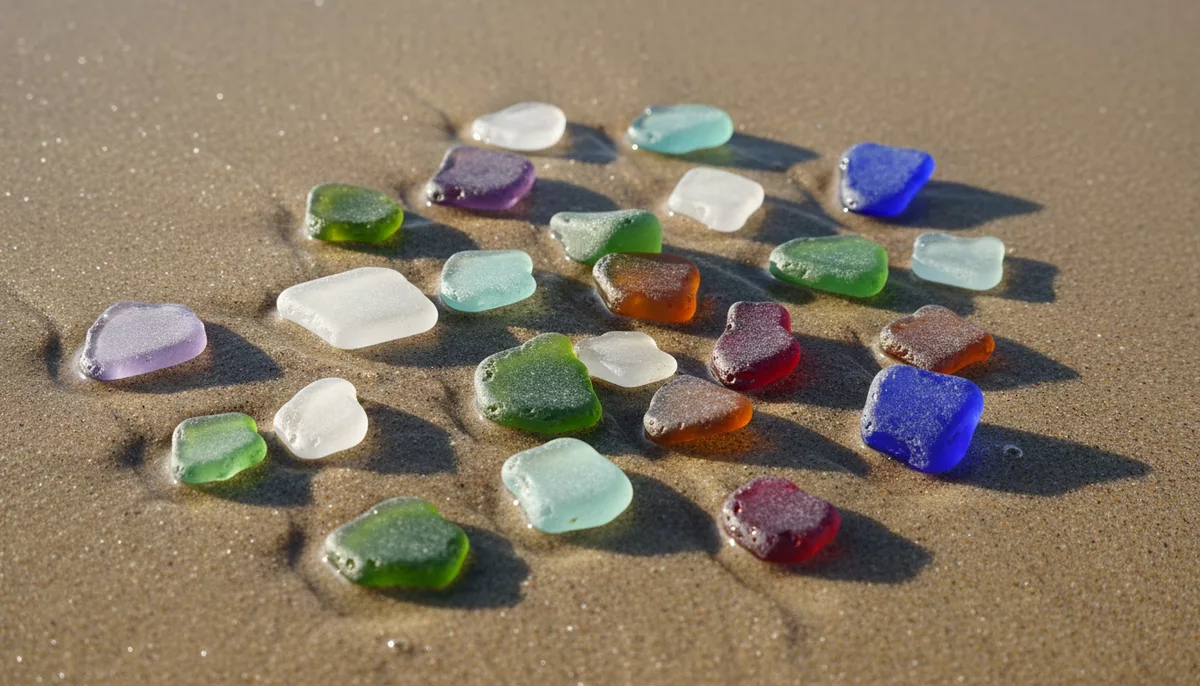
Not all sea glass is worth the same. White and green pieces cover most beaches in abundance, but certain colors are genuinely hard to find. Red sea glass might show up once in 5,000 pieces. Orange is even rarer than that.
This chart covers 16 colors organized by rarity tier. For each color, you'll find its approximate frequency, what kind of glass it originally came from, and notes on how to identify it. If you're new to collecting, use this as your field reference. If you've been at it for years, you might still learn something about the origins of a few colors.
Common
Found on every beachWhite / Clear
Source: Window glass, clear bottles, jars, tableware
The most abundant color by far. White sea glass comes from every era of glass manufacturing. Older pieces tend to be thicker and more heavily frosted.
Kelly Green
Source: Beer bottles, wine bottles, soda bottles
Standard green glass has been used in beverage bottles for over a century. Heineken, Rolling Rock, and wine bottles all contribute. Deep forest green is slightly less common than bright kelly green.
Brown / Amber
Source: Beer bottles, medicine bottles, snuff jars
Brown glass blocks UV light, which is why it's been the standard for beer bottles since the early 1900s. Older amber pieces from patent medicine bottles tend to be darker and more heavily pitted.
Uncommon
Worth picking upSeafoam Green
Source: Old Coca-Cola bottles, insulators, fruit jars
That soft blue-green tone comes from natural iron impurities in sand. Before modern manufacturing cleaned up glass recipes, seafoam was everywhere. Now it's getting harder to find as old sources dry up.
Cobalt Blue
Source: Noxzema jars, Milk of Magnesia bottles, Vicks VapoRub, decorative glass
Cobalt oxide creates this rich, deep blue. Some collectors hunt exclusively for cobalt. The best sources are beaches near old dumpsites where medicine bottles were discarded.
Aqua
Source: Ball canning jars, old soda bottles, ink bottles
Light blue-green glass was standard for canning jars from the 1850s through the early 1900s. True aqua sea glass is getting rarer as fewer old sources remain.
Gray
Source: Lead crystal, old window glass, television tubes
Gray sea glass often has a smoky, translucent quality. Some of the best pieces come from leaded crystal that's been tumbling for decades. CRT television glass also produces thick gray pieces near coastal dumps.
Rare
A great findCornflower Blue
Source: Vintage tableware (especially 1950s-60s), art glass
Softer than cobalt, this periwinkle shade came from mid-century tableware and decorative glass. It's one of the most sought-after shades among serious collectors.
Lavender / Purple
Source: Sun-purpled manganese glass (pre-1915), amethyst glass
Clear glass made before 1915 used manganese dioxide as a clarifier. Decades of UV exposure turns it pale purple. True lavender sea glass is always old - at least 100 years.
Citron / Yellow
Source: Depression-era tableware, old vaseline glass, automotive signals
Yellow sea glass can come from Depression glass tableware, uranium glass (which glows under UV light), or old traffic signal lenses. Bright lemon yellow is considerably rarer than pale yellow.
Teal
Source: Ink bottles, electrical insulators, mineral water bottles
A rich blue-green that's darker than seafoam and more saturated than aqua. Victorian-era ink bottles and Hemingray glass insulators are the primary sources.
Black
Source: Very old bottles (pre-1870s), thick olive glass
True black glass is extremely thick olive or dark amber that appears black until you hold it up to sunlight. Most pieces are from the 1700s or early 1800s. Hold it to the light - if it glows deep olive green or amber, you've got a genuinely old piece.
Very Rare
Collector's prizePink
Source: Depression glass, cranberry glass, art glass
Pink sea glass from Depression-era tableware or cranberry glass (colored with gold chloride) is a serious find. The pale, rosy tone is unmistakable and extremely hard to come by.
Extremely Rare
Once-in-a-lifetime findsRed
Source: Anchor Hocking Royal Ruby, car taillights, nautical lanterns, art glass
Red glass requires gold oxide or selenium in the recipe, making it expensive to produce. Most red sea glass comes from old car taillights, ship lanterns, or Anchor Hocking's Royal Ruby line (1938-1967). Finding a well-frosted red piece is a career highlight for most collectors.
Orange
Source: Art glass, tableware, signal lenses, decorative bottles
Orange may be the single rarest sea glass color. It was rarely mass-produced, and most orange glass came from small-batch art glass or specialty items. Some of the only known beaches producing orange pieces regularly are Seaham Beach in England and Davenport Beach in California.
Turquoise
Source: Art glass, specialty bottles, decorative items
Not to be confused with aqua, true turquoise is a vivid, opaque blue-green that came from art glass and specialty decorative pieces. It's striking and unmistakable when you find it.
Ready to Start Hunting?
Check out our location guides for the best sea glass beaches, learn what your finds are worth, or read more about rare colors on the blog.