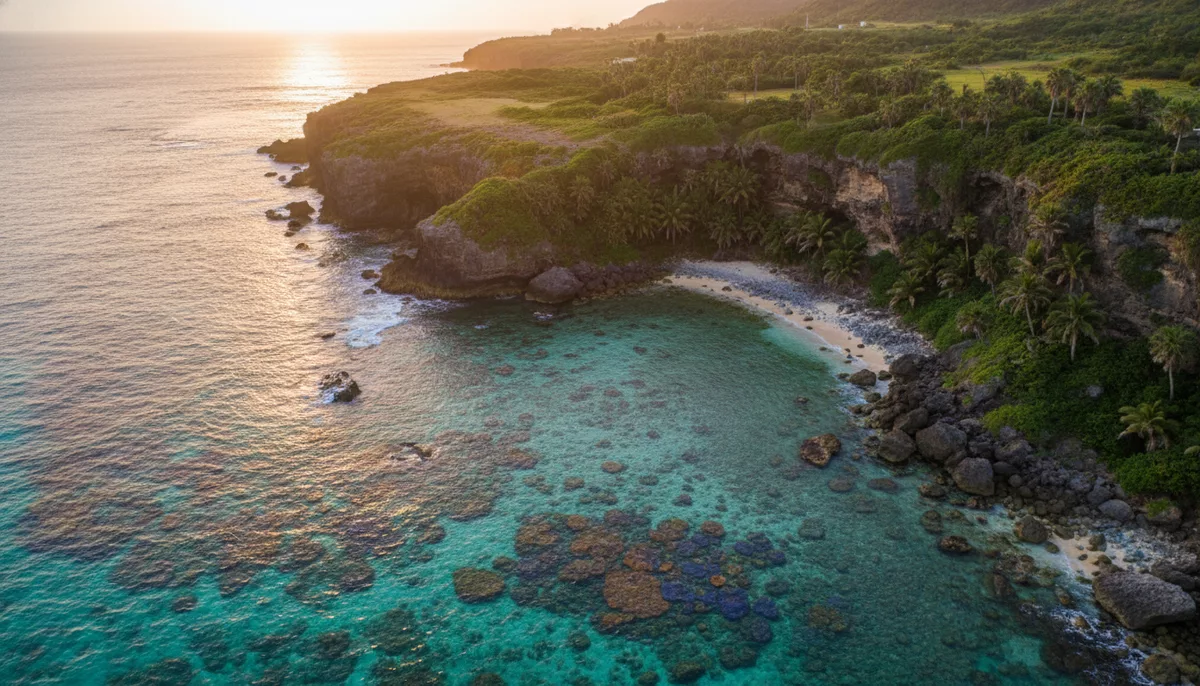
Most sea glass collectors know the big names - Fort Bragg, Seaham Beach, maybe Glass Beach on Kauai. But Okinawa, Japan's subtropical island chain stretching south toward Taiwan, has been quietly building a reputation among collectors who've discovered what its rocky coral coastlines have to offer. And what they offer is genuinely different from anywhere else.
The centerpiece is Sea Glass Beach in Nago, a former dump site turned natural attraction where thousands of frosted glass pieces carpet the shoreline. But the real magic of Okinawa sea glass goes beyond that one spot. The island chain's outer islands - particularly Ikei and Hamahiga - hide secluded rocky beaches where glass, coral, and shells pile up in tide pools and rock crevices. And then there's Okinawa's signature find: bonfire glass, those strange, bubbly, multi-colored chunks you won't encounter at most other beaches.
Why Okinawa Has Sea Glass
Okinawa's sea glass comes from a combination of military history, island life, and geography that's completely unique.
Post-war dumping. After World War II, Okinawa went through decades of rapid modernization under American administration (the US controlled the islands until 1972). During this period, waste disposal was informal at best. Coastal dump sites were common throughout the island chain, and millions of bottles - beer, soda, medicine, cosmetics, water - ended up crushed and broken along the shoreline. The most famous of these former dumps is at Henoko in Nago, which operated as a garbage disposal site until roughly 20 years ago.
US military presence. Okinawa has hosted major American military bases since 1945. Tens of thousands of service members and their families have lived on the island for eight decades. The sheer volume of American consumer products - Coca-Cola bottles, beer bottles, household glass - that passed through military installations and ended up in the waste stream is enormous. This is why you'll find American-style bottle glass alongside Japanese brands on Okinawa's beaches.
Coral reef coastline. Unlike sandy mainland beaches, Okinawa's coast is defined by raised coral limestone, rocky shelves, and tide pools. This rough substrate is ideal for tumbling glass. Pieces get trapped in rock crevices and coral rubble, grinding against the hard limestone with every tide cycle. The result is glass that's often well-frosted and textured in ways that soft sandy beaches can't produce.
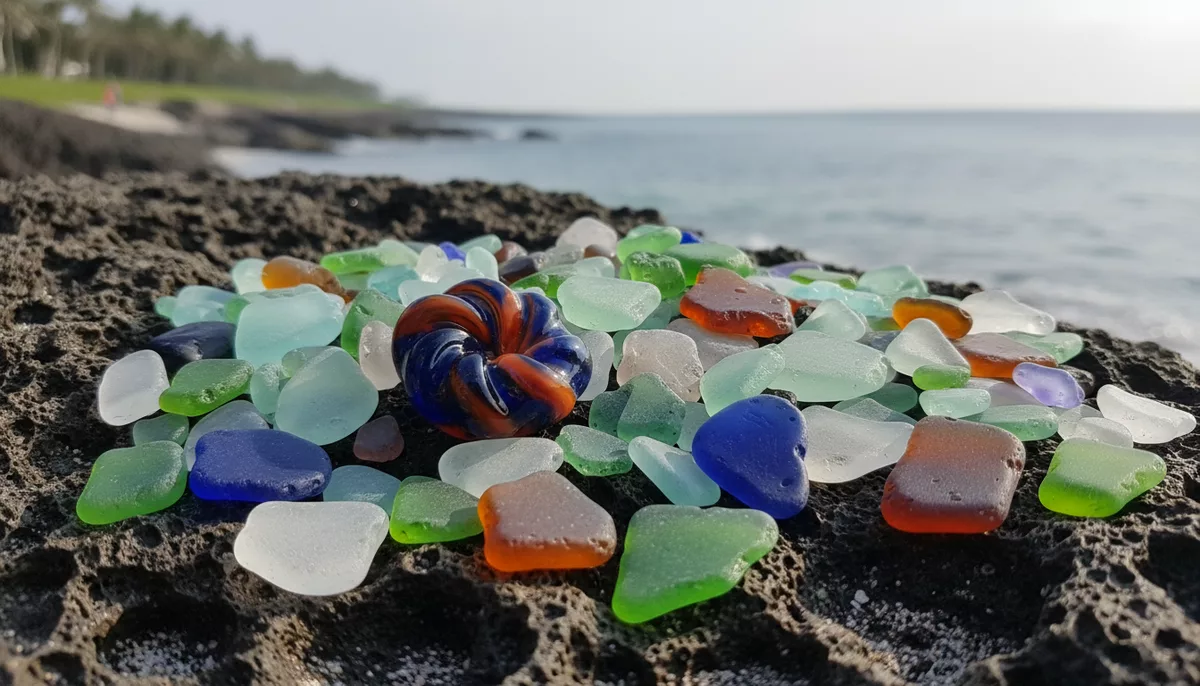
Bonfire culture. Beach bonfires were common throughout Okinawa's history - for waste burning, fishing camps, and social gatherings. When glass ends up in a fire on the beach, it partially melts, fusing with sand and ash to create what collectors call "bonfire glass." These pieces look bubbly and swirled, often with dark flecks of ash embedded in the glass and multiple colors melted together. Okinawa produces more bonfire glass than almost any other collecting destination in the world.
The Best Collecting Spots
Okinawa is a long, narrow island - about 70 miles from north to south - with dozens of smaller islands connected by bridges or short ferry rides. Sea glass can turn up on any rocky stretch of coast, but a few spots consistently produce the best finds.
Sea Glass Beach, Henoko (Nago)
This is Okinawa's most famous sea glass spot and the one that shows up in every travel guide. Located on the northern coast near the Henoko fishing harbor in Nago City, this beach sits on the site of a former garbage dump. Until about 20 years ago, this entire stretch of coastline was a disposal area. Thousands of bottles, plates, and other glass items were dumped here over decades. The ocean has spent the years since doing its work - breaking, tumbling, and frosting all that glass into collectible pieces.
What makes Sea Glass Beach special is the sheer density of glass. At low tide, the rocky coral shelf is littered with pieces in every common color - white, brown, green, aqua, and blue. Walk left along the beach and climb over the layered rock formations (good water shoes are essential) to reach the less-picked areas where glass accumulates in crevices and tide pools. The farther you go from the easy access points, the better your finds.
This is also the best spot on Okinawa for bonfire glass. Because waste was burned on-site before the dump closed, you'll find those distinctive fused, bubbly chunks where multiple colors of glass melted together with sand and ash. Bonfire glass pieces can be surprisingly large - sometimes palm-sized - and no two look alike. The best ones have swirling layers of blue, green, and amber with dark volcanic-looking inclusions.
Ikei Island
Connected to the main island by a bridge on Okinawa's east coast, Ikei Island is where experienced collectors go when they want a quieter, more productive hunt. The island has a quiet stretch of rocky beach near the Big Time Resort (parking costs about 500 yen) where sea glass mixes with shells and coral in the gaps between rocks.
The beaches on Ikei are rockier and more secluded than Sea Glass Beach in Nago, which means fewer visitors picking through the glass and more pieces accumulating between visits. The substrate here is rough coral limestone - perfect for naturally tumbling glass to a beautiful frosted finish. You'll also find tide pools worth exploring, where small pieces of glass settle alongside tropical shells and sea creatures.
The color profile on Ikei tends toward greens, whites, and browns, but blue and aqua pieces turn up regularly. The glass here is generally smaller and more worn than what you'd find at Nago's Sea Glass Beach, which actually makes it more desirable for jewelry-making - the pieces are naturally shaped and sized for pendants and wire-wrapping.
Hamahiga Island
Neighboring Ikei and also connected by bridge, Hamahiga Island has tucked-away stretches of rocky coastline that most tourists never visit. There's no single famous beach here - instead, you'll find sea glass by pulling off the road at small, unsigned beach access points and exploring the coral rock shelves at low tide.
Hamahiga rewards patience and exploration. The glass isn't concentrated in one spot like Nago. Instead, it's scattered across multiple coves and inlets where currents deposit debris against the rocks. Bring a bag and work your way along the coast at low tide, checking the spaces between coral boulders and in shallow pools. The isolation means pieces here can sit undiscovered for months.
Northern Coast Beaches
Some of Okinawa's best sea glass hunting happens at beaches that don't have names - or at least not names that appear on maps. Collectors who've spent time on the island report that driving along the northern coast and pulling off at random rocky beaches produces excellent finds. The north end of Okinawa is much less developed than the central and southern sections, and small rocky beaches along the coast accumulate glass from decades of ocean currents with almost nobody around to collect it.
The trick is looking for rocky shorelines rather than sandy ones. Sandy tourist beaches in Okinawa rarely produce sea glass because the fine sand doesn't trap pieces effectively. But any stretch of raised coral shelf with tide pools and crevices is worth checking.
What Colors to Expect
Okinawa's sea glass reflects both Japanese and American consumer products, giving it a color profile that's distinct from most Western collecting destinations:
- White/clear - The most common color. Japanese sake bottles, shochu bottles, and American soft drink containers all contribute clear glass that frosts to a milky white.
- Green - Very common. Beer bottles (both Japanese brands like Orion and American imports), wine bottles, and soda bottles. You'll see shades from pale seafoam to deep olive.
- Brown/amber - Common. Beer bottles and medicine containers. Darker amber pieces may come from older Japanese medicine bottles.
- Aqua and light blue - Moderately common. Older Japanese glass often has a natural aqua tint, and some cosmetic and medicine bottles were produced in pale blue. These are beautiful pieces.
- Cobalt blue - Uncommon but present. Primarily from medicine bottles and some cosmetic containers. Cobalt pieces stand out dramatically against the white coral rock.
- Bonfire glass - This is Okinawa's specialty. Multi-colored fused chunks where heat melted different glass colors together with sand and ash. Colors swirl and layer - you might find a single piece with green, amber, white, and blue all melted together. Not technically a single color, but a category unique to beaches with bonfire history.
- Red, orange, purple - Rare, as everywhere. But the volume of glass that went through Okinawa's dump sites means occasional rare colors do surface. Red and pink pieces, while unusual, have been found at Sea Glass Beach in Nago.
The sea glass color rarity chart can help you identify uncommon finds, and our value and grading guide explains what makes certain pieces more collectible than others.
Best Time to Hunt
One of Okinawa's biggest advantages as a sea glass destination: you can collect year-round. The subtropical climate means beaches are accessible every month, though conditions vary seasonally:
- Low tide - This matters more in Okinawa than almost anywhere else. The coral rock shelves that hold the best glass are exposed at low tide and submerged at high tide. Check a local tide table (search "Okinawa tide chart") and plan your visit for the lowest tide of the day. The difference between high and low tide collecting here is enormous.
- After typhoons (August - October) - Okinawa sits in typhoon alley and gets hit by several major storms each year. These storms churn up the seafloor and redistribute glass that's been sitting offshore. The days after a typhoon passes - once it's safe to be on the beach - are prime collecting time after storms.
- Winter months (December - February) - Fewer tourists and lower crowds at popular spots like Sea Glass Beach in Nago. Temperatures stay mild (60-70 degrees F) and the water is cooler but the beaches are comfortable. Winter swells also push new glass ashore.
- Early morning - Sea Glass Beach in Nago gets regular visitors throughout the day, especially on weekends. Arrive early for the best selection of untouched glass.
- Rainy season (May - June) - Okinawa's tsuyu (rainy season) runs roughly May through June. Rain itself doesn't affect sea glass hunting much, but the runoff can wash new glass from hillside dump sites down to the coast. Plan around the heavier downpours and you might find freshly deposited pieces.
Collecting Rules and Etiquette
Japan doesn't have specific laws against collecting sea glass from public beaches. Sea Glass Beach in Nago is a public area and taking glass is accepted - it's one of the reasons people visit. The outer islands are similarly open to collecting.
That said, Japanese culture emphasizes respect for shared spaces. Take what genuinely interests you, but don't sweep a beach clean. Leave pieces for other collectors. Don't disturb tide pool ecosystems while hunting - the coral reef environment is ecologically sensitive and protected under Japanese environmental law. Never break coral or move large rocks to access glass underneath.
One important note: some Okinawa beaches are on or adjacent to US military installations. Torii Beach, for example, sits on an Army base and requires military ID or an invitation from someone with base access. Don't attempt to access restricted beaches without proper authorization.
Getting to Okinawa
Okinawa is well-connected by air from mainland Japan and several international cities:
- From Tokyo - About 2.5 hours to Naha Airport (OKA), with dozens of daily flights on ANA, JAL, and budget carriers like Peach and Jetstar
- From Osaka - About 2 hours, multiple daily flights
- From Seoul - About 2 hours, several flights per week
- From Taipei - About 1.5 hours, frequent service
- From Hong Kong - About 2.5 hours
Once on the island, you'll need a rental car to reach the best sea glass spots. Unlike mainland Japan where trains go everywhere, Okinawa's public transit is limited. Naha has a monorail, but Sea Glass Beach in Nago is about 90 minutes north by car. Ikei and Hamahiga islands are roughly an hour east of Naha. International visitors can rent cars with an International Driving Permit - driving is on the left side of the road, as in the rest of Japan.
If you're staying near Sea Glass Beach, the Henoko area in Nago has limited accommodation, but the nearby resort areas of Onna and Chatan offer plenty of hotels and are within 30-45 minutes of the beach.
What Else to Do
Okinawa is a world-class destination beyond sea glass. The island's coral reefs are among the best diving and snorkeling sites in the Pacific - and you might spot glass underwater in the shallows near former dump sites. The Churaumi Aquarium near Nago is one of the largest in the world and makes a natural pairing with a Sea Glass Beach visit.
The island's cultural heritage is rich and distinct from mainland Japan. Okinawa was an independent kingdom (the Ryukyu Kingdom) until 1879, and that history shows in its architecture, food, music, and crafts. Shuri Castle in Naha, the former royal palace, is worth visiting. And Okinawan food - champuru stir-fries, soki soba, and purple sweet potato tarts - is genuinely excellent.
If you're interested in turning your finds into something wearable, our sea glass jewelry making guide covers techniques that work especially well with the smaller, well-frosted pieces typical of Okinawa's coral beaches.
Okinawa vs. Other Sea Glass Destinations
- Okinawa vs. Fort Bragg - Fort Bragg has more glass in one concentrated spot, but you can't take any home. Okinawa lets you keep your finds, and the bonfire glass is something Fort Bragg doesn't offer. Fort Bragg wins on visual spectacle; Okinawa wins on variety and the thrill of actually building a collection.
- Okinawa vs. Glass Beach, Kauai - Both are Pacific island destinations with abundant glass from former industrial/dump sources. Kauai's glass is more concentrated on a single beach. Okinawa offers more exploration across multiple islands and spots. Okinawa's bonfire glass is unique.
- Okinawa vs. Seaham Beach - Seaham has rarer Victorian factory glass with extraordinary multi-colored patterns. Okinawa has bonfire glass, which is a different kind of multi-colored find. Seaham is better for high-value collector pieces; Okinawa is better for volume and tropical adventure.
- Okinawa vs. Steklyashka Beach - Both originated as dump sites and both produce abundant glass. Steklyashka has larger pieces on average. Okinawa is far more accessible and has better infrastructure for travelers. Both are excellent for collectors who want to fill a bag.
More Sea Glass Locations
Exploring the world's best sea glass destinations? Browse our complete list of sea glass locations, or read our beginner's guide to sea glass collecting if you're just getting started. For tips on the best time to find sea glass, check our seasonal guide.