Sea Glass Value Guide
How to grade your sea glass finds and understand what they're actually worth - from craft-bin commons to collector-grade rarities.
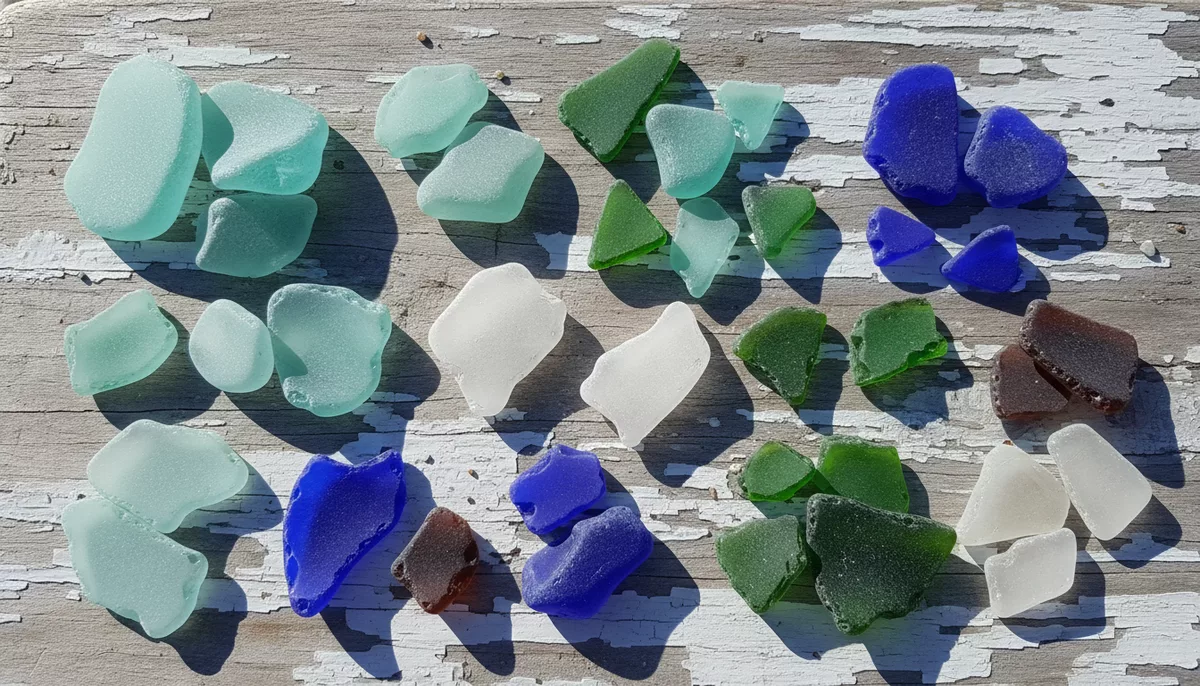
Most sea glass is worth very little. That's just the reality. White, green, and brown pieces are everywhere, and unless they have exceptional frost or an unusual shape, they'll sell for pennies at best.
But some sea glass is genuinely valuable. A well-frosted red piece the size of a nickel can sell for over $100. An orange teardrop with heavy frost might go for $200 or more. The difference between a $0.50 piece and a $150 piece comes down to four factors: color, frost, shape, and size.
This guide breaks down exactly how to assess each factor so you can grade your own collection and know what you're working with.
The Four Grading Factors
Every piece of sea glass can be evaluated on these four criteria. Color carries the most weight, followed by frost quality, then shape and size.
Color Rarity
40% of valueColor is the single biggest factor in sea glass value. Common colors like white, green, and brown are abundant and worth very little on their own. Rare colors command exponentially higher prices.
These colors make up 85-90% of all sea glass. They're great for craft projects but won't fetch much individually.
Worth keeping and selling, especially cobalt blue. A well-frosted cobalt piece in good shape can push toward the higher end.
These colors are genuinely hard to find. Lavender (sun-purpled manganese glass) is always at least 100 years old, which adds historical appeal.
Pink from Depression glass or cranberry glass is a serious collector's piece. Well-frosted pink sea glass in good shape sells quickly.
Red sea glass appears roughly once in every 5,000 pieces. Orange is even rarer. These colors attract serious collectors who will pay top dollar for quality specimens.
Frost Quality
25% of valueFrost - that cloudy, matte surface texture - is what separates real sea glass from broken glass. It develops over decades of tumbling in sand, salt water, and surf. The quality of frost tells you how long the glass has been in the ocean.
The entire piece is uniformly frosted with no shiny spots. The surface feels like fine sandpaper. This takes 50+ years of ocean tumbling. Hold it up to light - gem-grade frost diffuses light evenly without any clear patches.
Overall well-frosted but might have a small area where the frost is lighter, often in a concave spot that was protected from abrasion. Still very desirable for jewelry making.
Clearly sea glass (not fresh broken glass) but hasn't been tumbling long enough for complete coverage. Maybe 20-30 years in the water. The contrast between frosted and clear areas is visible.
Only lightly frosted, often from a protected or low-energy beach where wave action is gentle. Still usable for mosaics and craft projects, but won't command collector prices.
Shape
20% of valueShape matters because it determines what the piece can be used for. Jewelers want smooth, rounded pieces they can wire-wrap or set. Collectors prefer shapes that display well. Sharp edges and angular fragments are less desirable.
Every edge is fully rounded. The piece feels like a river stone - no corners, no points, no flat breaks. These are the oldest pieces, worn smooth over many decades. Triangular 'teardrops' in this category are especially prized.
Overall rounded with good edges but might have one flatter side where it broke from a thicker section of glass. Still excellent for jewelry.
The edges are softened but the piece still clearly shows where it broke. Common with thicker glass that takes longer to fully round out.
Recently broken or from a low-energy beach. These pieces haven't tumbled long enough. They're fine for mosaics or crafts where shape doesn't matter.
Size
15% of valueSize affects value in a less straightforward way than the other factors. Very small pieces are hard to work with. Very large pieces are rare but not always more valuable than medium ones. The sweet spot depends on intended use.
Too small for most jewelry settings. Useful for resin fills, tiny pendants, or collection displays. A micro red piece is still worth good money though - rarity trumps size.
Perfect for stud earrings, delicate pendants, and charm bracelets. This is actually the most popular size for jewelry makers.
The sweet spot. Big enough to show off color and frost, small enough for pendants and rings. This size range commands the highest prices relative to all other factors.
Large, well-frosted pieces are uncommon because bigger glass tends to break further before fully rounding. Display-worthy specimens. Collectors pay premiums for large rare colors.
Overall Grades & Price Ranges
When you combine all four factors, sea glass falls into one of five overall grades. Here's what each grade means and what it typically sells for.
The top tier. Rare color + heavy frost + smooth shape + good size. These are museum-quality pieces.
Rare or uncommon color with good frost and shape. Serious collectors seek these out.
Any color with good enough frost and shape to set in jewelry. The workhouse of the sea glass market.
Usable for mosaics, resin art, and mixed-media projects. Less frost or imperfect shape.
Minimal frost, sharp edges, or recently broken. Still natural sea glass but not ready for market.
Tips for Selling Sea Glass
If you're looking to sell your collection, here's what actually works.
Sort Before You Sell
Go through your entire collection and separate pieces by grade. Don't mix gem-grade rarities with craft-grade commons - you'll undervalue the good pieces and make the cheap ones look worse. Sell rare pieces individually with close-up photos. Sell common colors in bulk lots by color or grade.
Photography Matters
Take photos on a plain white or light gray background, or on wet sand for that authentic look. Backlight translucent pieces to show color depth. Include something for scale - a coin or ruler next to the piece. Natural daylight gives the most accurate colors. Flash tends to wash out frost and make colors look wrong. For the full breakdown of lighting setups, backgrounds, and editing tips, see our sea glass photography guide.
Where to Sell
Etsy is the biggest market for raw sea glass and sea glass jewelry. List pieces individually with detailed descriptions covering color, frost quality, size, and source beach if known. eBay works well for rare colors - collectors watch for specific search terms like "red sea glass" or "orange sea glass genuine." Local craft fairs move volume on jewelry-grade and craft-grade pieces. Facebook Marketplace is hit-or-miss but costs nothing to list.
Pricing Strategy
Start by browsing completed eBay listings and sold Etsy items for comparable pieces - not asking prices, but what people actually paid. Price rare colors at the high end and be patient. Price common colors low and focus on volume. Bulk lots of 50-100 craft-grade pieces sorted by color sell consistently in the $10-$25 range.
Frequently Asked Questions
How much is sea glass worth?
It depends entirely on the piece. Common white or green sea glass is worth under $1 individually. Uncommon colors like cobalt blue in good condition sell for $2-$10. Rare colors like lavender or cornflower blue fetch $10-$50. Extremely rare colors like red, orange, or turquoise in gem grade condition can sell for $50-$300 or more. The most valuable pieces combine rare color, heavy frost, smooth shape, and good size.
What makes sea glass valuable?
Four factors: color rarity (40% of value), frost quality (25%), shape (20%), and size (15%). Color matters most because rare glass was expensive to produce, so there's simply less of it in the ocean. Frost indicates age and authenticity. Shape determines usability in jewelry. Size affects display appeal and versatility.
How do you grade sea glass?
Evaluate each piece on the four grading factors above, then assign an overall grade. Gem grade is the highest - rare color, heavy frost, smooth shape, good size. Collector grade is next - rare or uncommon color with good frost and shape. Jewelry grade means any color with enough frost and smoothness for settings. Craft grade covers pieces with moderate frost or imperfect shape. Beach glass is anything too rough, angular, or freshly broken for other uses.
Is it legal to sell sea glass?
Yes, selling sea glass you've collected is legal. But collecting itself is restricted at some beaches. Glass Beach in Fort Bragg, California prohibits taking sea glass since it's part of MacKerricher State Park. Many national seashores have similar rules. Always check local regulations before collecting. Private beaches typically allow collecting with the landowner's permission.
Where can I sell sea glass?
The best platforms are Etsy (largest sea glass market), eBay (good for rare individual pieces), local craft fairs (great for jewelry), and Facebook Marketplace. Etsy works best for curated lots and jewelry. eBay auction format can drive up prices on rare colors when collectors compete. Specialty sea glass shops and galleries are options for gem-grade pieces but typically take a commission.
Learn More About Sea Glass
- Sea Glass Color Rarity Chart - See every color ranked from common to rare
- Guide to Rare Sea Glass Colors - Deep dive into the rarest colors and where to find them
- Real vs. Fake Sea Glass - How to spot artificial sea glass
- How to Make Sea Glass Jewelry - Turn your collection into wearable art
- Beginner's Guide to Collecting - Everything you need to start hunting
- Best Sea Glass Beaches - Location guides for top collecting spots worldwide
Know What You're Looking For
Use our color rarity chart as a field guide on your next beach trip, and check locations for where to find the best pieces.