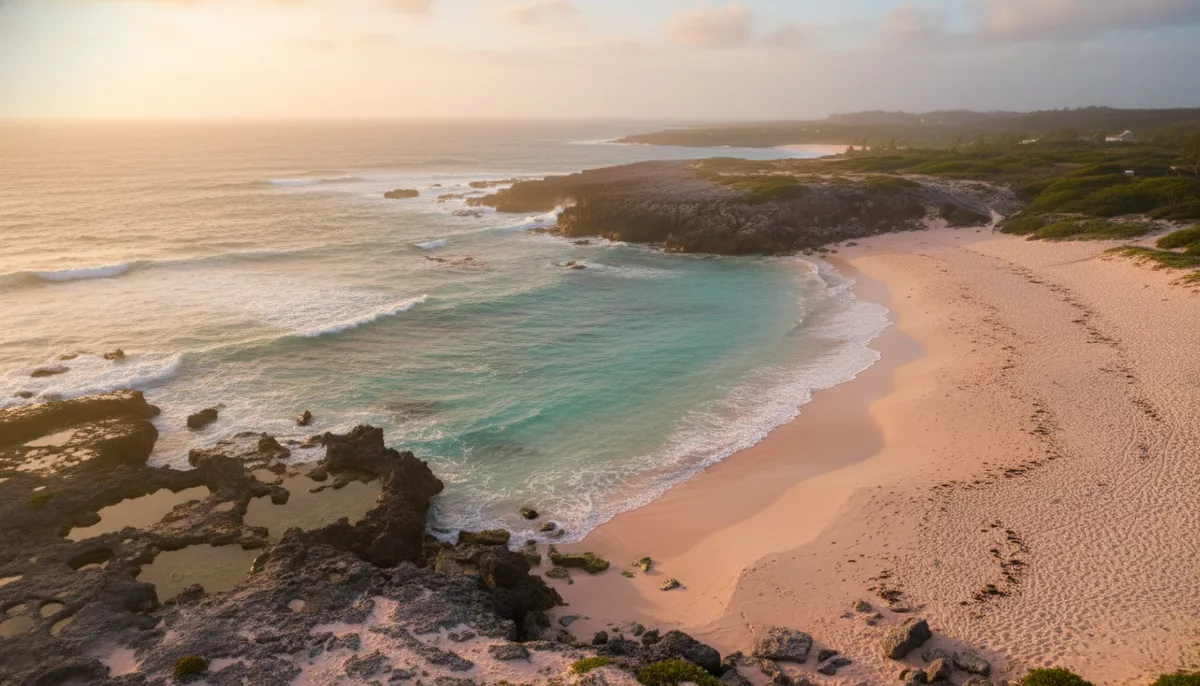
Bermuda isn't the first place most collectors think of when they picture sea glass hunting. California and England get the headlines. But this tiny chain of islands in the North Atlantic has been quietly producing some of the most beautiful sea glass finds anywhere - frosted pieces scattered across pink sand beaches, backlit by water so clear it barely looks real.
What makes Bermuda special isn't volume. You won't find beaches carpeted in glass like Fort Bragg or Steklyashka Beach. What you'll find instead is quality pieces in a setting that makes the whole experience feel different. Bermuda's sheltered coves, limestone rock formations, and centuries of maritime activity have created a handful of genuinely rewarding collecting spots - particularly in the historic town of St. George's.
Why Bermuda Has Sea Glass
Bermuda's sea glass comes from a few distinct sources, and understanding them helps you know where to look and what you're finding.
Centuries of maritime activity. Bermuda sits alone in the North Atlantic, roughly 650 miles east of Cape Hatteras, North Carolina. Since the island was first settled in 1612, it's served as a critical waypoint for Atlantic shipping routes. British naval vessels, merchant ships, and privateers all used Bermuda's harbors. For over 400 years, bottles, tableware, and cargo glass have been going overboard or washing out of shoreline dumps.
The Royal Naval Dockyard. The British Royal Navy maintained a major dockyard on Bermuda's western end from 1809 until 1951. For nearly 150 years, this was one of the most important naval bases in the Western Hemisphere. The dockyard complex employed thousands and generated enormous amounts of waste - including glass from bottles, medicine containers, signal lanterns, and officers' mess tableware. Much of that waste ended up in the surrounding waters.
Historic dump sites. Like most island communities before modern waste management, Bermuda's parishes disposed of trash by dumping it near the shore. Several beaches sit adjacent to former dumping areas, particularly around St. George's - the oldest continuously inhabited English settlement in the New World, founded in 1612. Four centuries of accumulated glass waste feeds the beaches there.
Shipwrecks. Bermuda's surrounding reef system is one of the most extensive in the North Atlantic. The reefs have claimed hundreds of ships over the centuries, and cargo from these wrecks - including glass bottles, tableware, and trade goods - still washes ashore. You'll occasionally find pieces with unusual thickness or coloring that likely came from much older vessels.
The Best Collecting Spots
Not every Bermuda beach produces sea glass. The island's south shore beaches are beautiful but face open ocean - waves are too powerful and the sand too fine for glass to accumulate. The best collecting happens on the more sheltered north shore and in the protected harbors and coves around St. George's Parish at the island's east end.
Black Bay Beach, St. George's
Black Bay is Bermuda's best-known sea glass beach and the spot most collectors head to first. It's a small, sheltered cove on the north side of St. George's Island, tucked behind the old military fortifications. The beach itself is compact - maybe 100 yards of shoreline - but the glass concentration can be surprisingly good.
The glass here comes primarily from the town of St. George's, which has been occupied since 1612. Four centuries of bottles, tableware, and household glass have worked their way into the surrounding waters. The cove's sheltered position means pieces don't get swept out to sea - they tumble against the limestone rocks and coarse sand until they're properly frosted, then deposit along the tide line.
What you'll typically find at Black Bay: green and brown bottle glass (the most common), aqua and seafoam pieces from older bottles, white frosted glass from tableware, and occasionally cobalt blue or amber. The glass tends to be well-frosted due to the coarse limestone sand and rocky bottom. Check carefully among the dark rocks at the waterline - the contrast makes sea glass easy to spot.
Alexandra Battery Beach
Just around the headland from Black Bay sits Alexandra Battery Beach, named for the Victorian-era coastal fortification above it. This beach is rockier than Black Bay and less visited by tourists, which means pieces tend to stick around longer between collectors.
The glass here has a similar profile to Black Bay - it comes from the same St. George's sources - but the rockier substrate tends to produce slightly different pieces. You'll find more angular, partially tumbled glass here alongside the well-rounded pieces. Some collectors prefer this because partially tumbled glass sometimes retains enough shape to identify the original bottle type.
Buildings Bay
Also in St. George's Parish, Buildings Bay is a small rocky inlet that's easy to miss if you don't know about it. The beach is mostly rock and coral rubble, not sand, which makes it less appealing to swimmers but productive for sea glass. Glass pieces get trapped among the rocks and limestone rubble, and each high tide shuffles them around.
Buildings Bay tends to produce smaller pieces than Black Bay - the rocky environment breaks glass down faster. But the color variety can be excellent, and the spot sees very few other collectors.
Dockyard Area, Sandy's Parish
The beaches near the old Royal Naval Dockyard on Bermuda's west end are worth checking, though they're less consistent than the St. George's spots. The dockyard operated for nearly 150 years and generated substantial glass waste. Snorkel Bay and the small beaches along the dockyard's north side occasionally produce finds, particularly after storms that churn up the shallow harbor bottom.
What Colors to Expect
Bermuda's sea glass color profile reflects the island's history as a British colony and Atlantic trading hub:
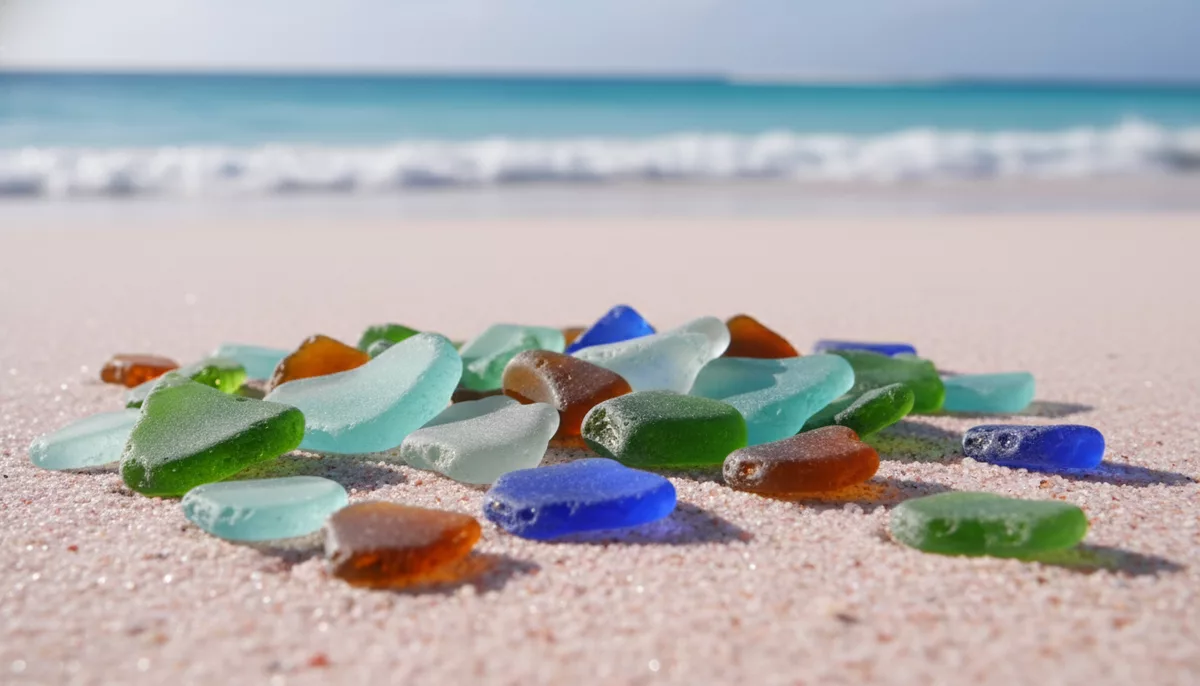
- Green - The most common color, from wine bottles, beer bottles, and everyday containers spanning several centuries. You'll find everything from deep olive (older) to bright emerald (newer).
- Brown/amber - Common, primarily from beer and medicine bottles. Darker amber pieces may be older.
- White/clear - Frosted clear glass from tableware, milk bottles, and newer containers. Abundant but not as eye-catching.
- Aqua and seafoam - Moderately common. Older bottle glass from the 1800s and early 1900s often had a natural aqua or blue-green tint from iron content in the sand used to make the glass. These are lovely pieces and distinctly different from modern glass.
- Cobalt blue - Uncommon but present. Primarily from medicine bottles (Bromo-Seltzer, Phillips' Milk of Magnesia, and similar products that were sold in distinctive blue bottles). Bermuda imported large quantities of these patent medicines over the decades.
- Turquoise - Occasional finds. Some of the most beautiful Bermuda glass comes in a pale turquoise shade that looks stunning against the pink sand.
- Red, orange, purple - Rare. Like anywhere, these colors are uncommon because fewer products were packaged in these colors. Finding red glass on any beach is a good day.
One thing that sets Bermuda apart: the pink sand creates a gorgeous contrast with sea glass of any color. A handful of green and aqua pieces looks more striking on Bermuda's pink beaches than it would on a gray-pebble beach elsewhere. If you photograph your finds, the pink sand makes a natural backdrop that's hard to beat.
Best Time to Hunt
Bermuda's subtropical climate means you can hunt sea glass year-round, but some conditions are better than others:
- After winter storms - Bermuda gets hit by powerful Atlantic storms from November through March. These storms churn up the seabed and redistribute glass onto the beaches. The day or two after a storm passes is prime collecting time.
- Low tide - Bermuda's tidal range is relatively small (about 3 feet) compared to places like Seaham Beach, but low tide still exposes more beach and rock shelf where glass hides. Check a local tide chart before heading out.
- Early morning - St. George's gets tourist foot traffic during the day, especially when cruise ships are in port. Early morning visits give you the best shot at untouched beaches.
- Off-season (November - March) - Fewer tourists means fewer casual collectors. Combined with winter storms, this is objectively the best time for sea glass, though the weather can be windy and cool by Bermuda standards (60-65 degrees F).
- Non-cruise-ship days - Bermuda receives large cruise ships several times a week during the April-October season. When a ship is in port, tour groups visit St. George's and some will wander the beaches. Check the cruise ship schedule on the Bermuda Tourism Authority website and plan around it.
Collecting Rules
Bermuda doesn't have specific laws prohibiting the collection of sea glass from its beaches. Unlike Glass Beach at Fort Bragg, which sits inside a state park with no-collecting rules, Bermuda's sea glass spots are public beaches where taking a pocketful of glass is perfectly fine.
That said, Bermuda is a small island with limited beaches. There's a general expectation that you'll take reasonable amounts - a handful of your best finds, not a bucket. The sea glass supply here isn't being replenished by active dumping, so what washes up now is essentially finite. Take photos of everything, bring home only the pieces that genuinely excite you.
Also worth knowing: removing sand, coral, shells, or rocks from Bermuda's beaches is technically restricted under the Bermuda National Parks Act. Sea glass isn't specifically mentioned, but it's good to be aware that the island takes beach preservation seriously. Stick to glass and you'll be fine.
Getting to Bermuda
Bermuda is served by L.F. Wade International Airport (BDA) with direct flights from major East Coast cities:
- From New York/Newark - About 2 hours, multiple daily flights
- From Boston - About 2 hours, several flights per week
- From Washington DC - About 2.5 hours
- From Toronto - About 3 hours
- From London - About 7 hours (British Airways operates the route)
Once on the island, getting to the sea glass beaches is straightforward. Bermuda doesn't allow rental cars for tourists - you'll use buses, ferries, scooter/electric car rentals, or taxis. The bus system is reliable and covers the whole island. Bus route 1, 3, 10, or 11 will get you to St. George's from Hamilton (the capital) in about 40 minutes. The ferry from Hamilton to the Dockyard area runs frequently and is one of the most scenic commutes anywhere.
St. George's itself is compact and walkable. From the main square, Black Bay Beach and Alexandra Battery Beach are both within a 15-minute walk. Buildings Bay is slightly further but still an easy stroll through the old town's narrow lanes.
What Else to Do
Sea glass hunting pairs naturally with Bermuda's other attractions. The island's reef system makes for excellent snorkeling and diving - you might even spot glass underwater in the shallows. St. George's is a UNESCO World Heritage Site with 400-year-old buildings, narrow alleys, and a genuine sense of history that makes the sea glass feel connected to something larger than just a hobby.
The sea glass color rarity chart can help you identify any unusual finds. And if you discover a piece you think might be truly old or rare, our value and grading guide covers what factors determine a piece's worth.
Bermuda vs. Other Sea Glass Destinations
- Bermuda vs. Fort Bragg - Fort Bragg has vastly more glass, but you can't take any. Bermuda lets you keep your finds. Fort Bragg wins on sheer visual impact; Bermuda wins on the overall experience - pink sand, warm water, and a beautiful setting.
- Bermuda vs. Seaham Beach - Seaham has rarer factory glass and more unusual colors. Bermuda has better weather and a more relaxed atmosphere. Both are excellent for collectors who want quality over quantity.
- Bermuda vs. Glass Beach, Kauai - Similar tropical appeal, but Kauai's glass is more abundant (from industrial sources) while Bermuda's is more historically varied. Both are worth visiting if you're already traveling there.
More Sea Glass Locations
Exploring the world's best sea glass destinations? Browse our complete list of sea glass locations, or read our beginner's guide to sea glass collecting for tips on getting started. For beaches with a similar industrial history, check out Spectacle Island in Boston Harbor.